Cambridge Computer Club

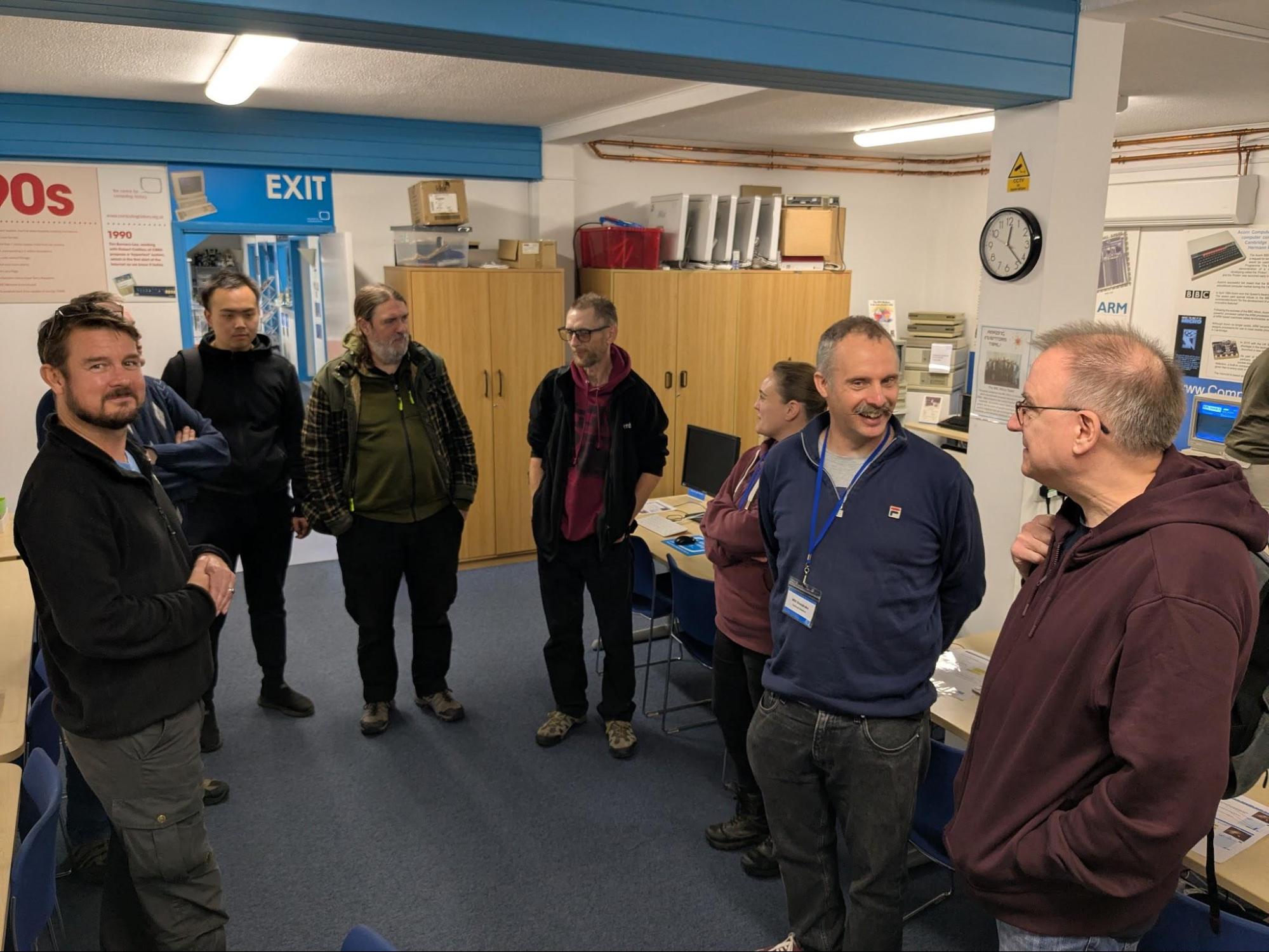
A super relaxed and friendly group of just about anyone that is interested in vintage computers that happens to be able to attend. It's that simple really.

So far we have had four meetups at the brilliant and wonderfully accommodating Cambridge Centre for Computing History.

Cambridge Centre for Computing History →
Next Meeting
23rd August Cambridge Centre for Computing History
#4 10th May 2026 #3 8th February 2026 #2 12th October 2025 #1 31st August 2025
Meeting #4

10th May, 2026

Cambridge Centre for Computing History

Meeting Summary

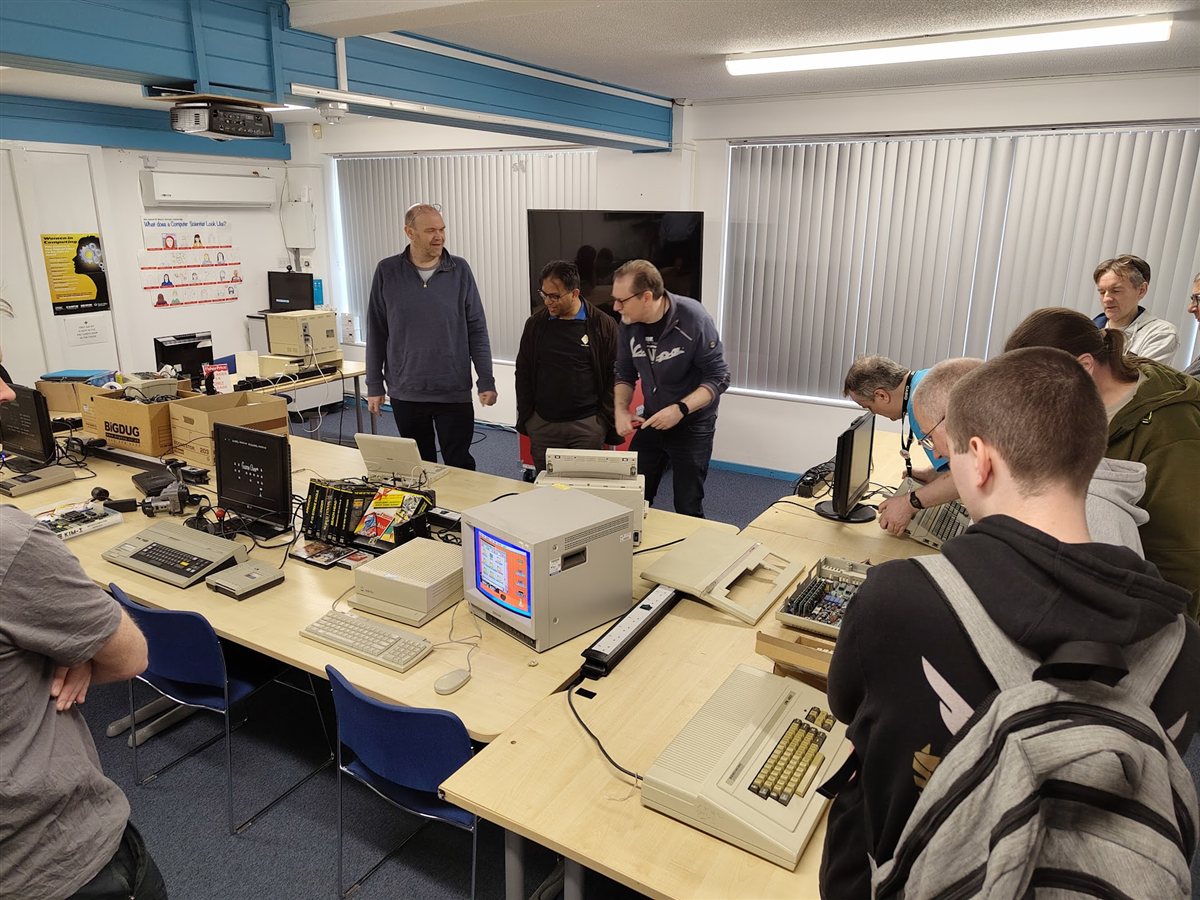
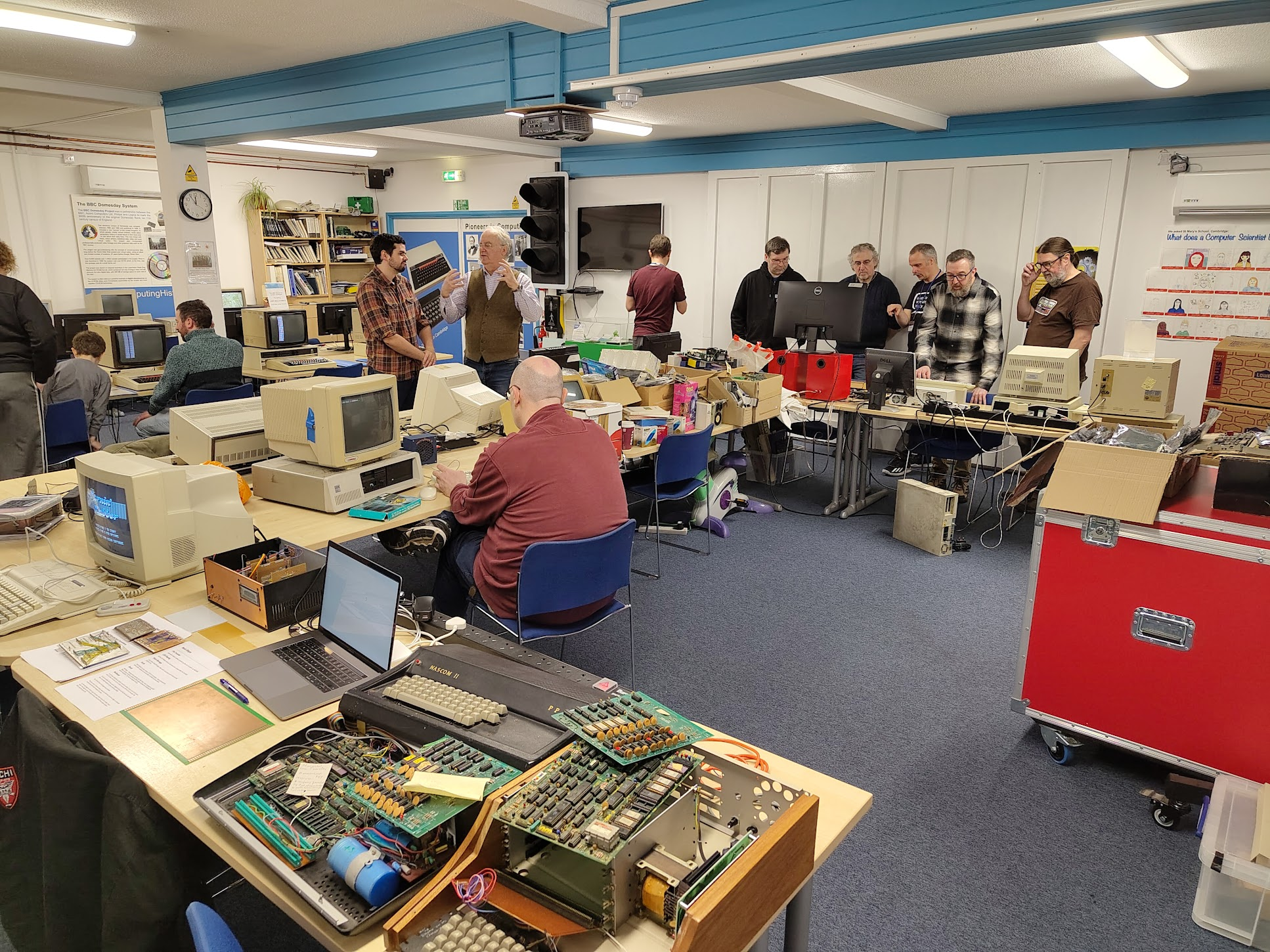
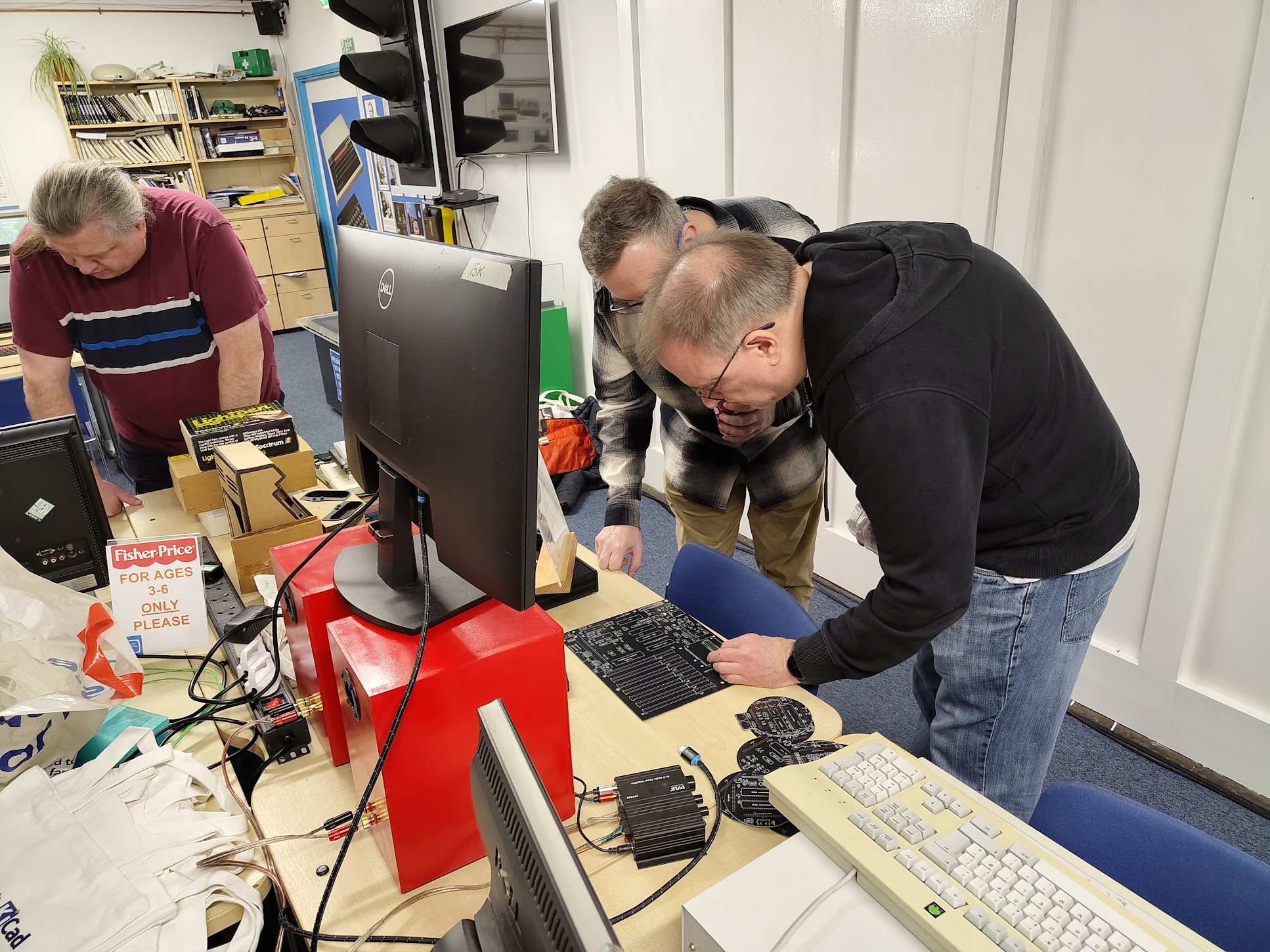
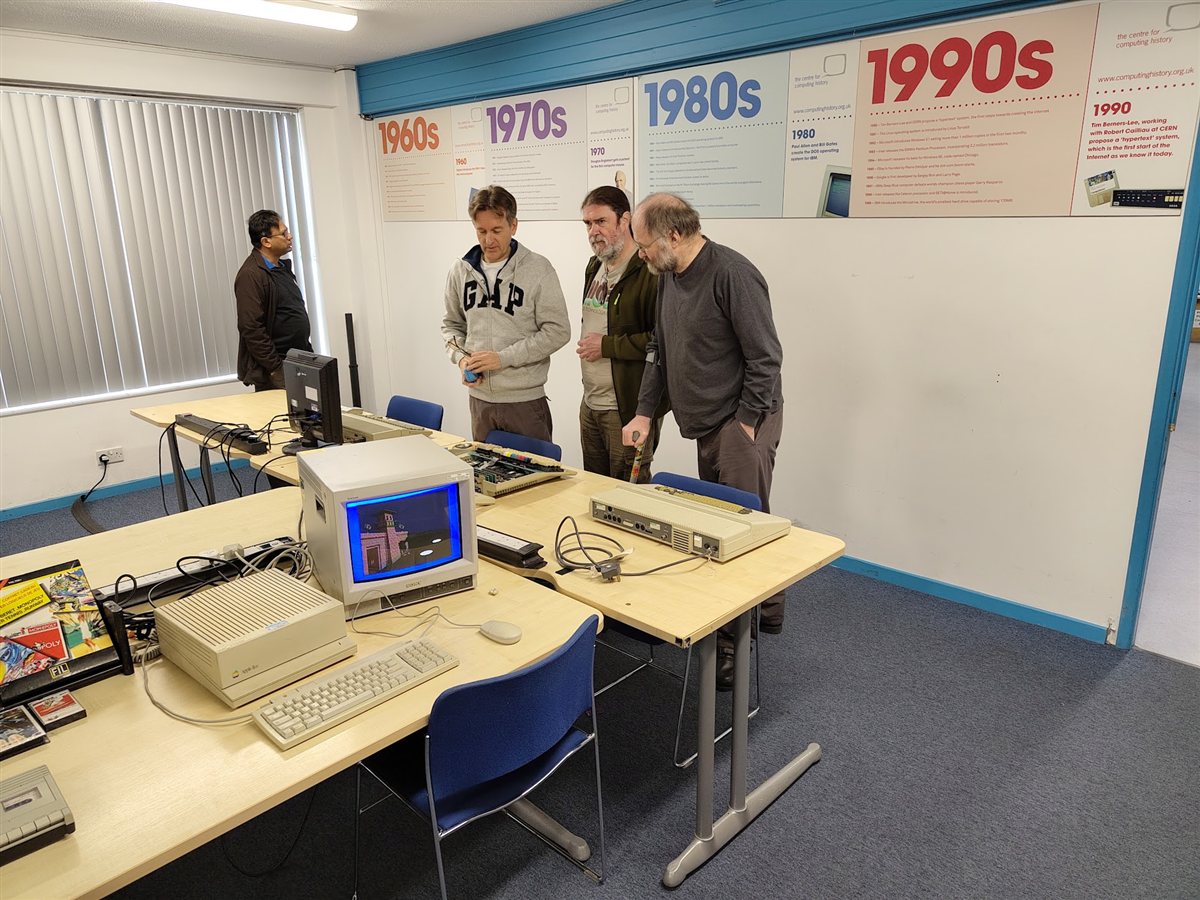
We had quite a few new faces, and some of those new faces brought their own stuff to show off. By the time we were an hour in we'd used up all the tables.
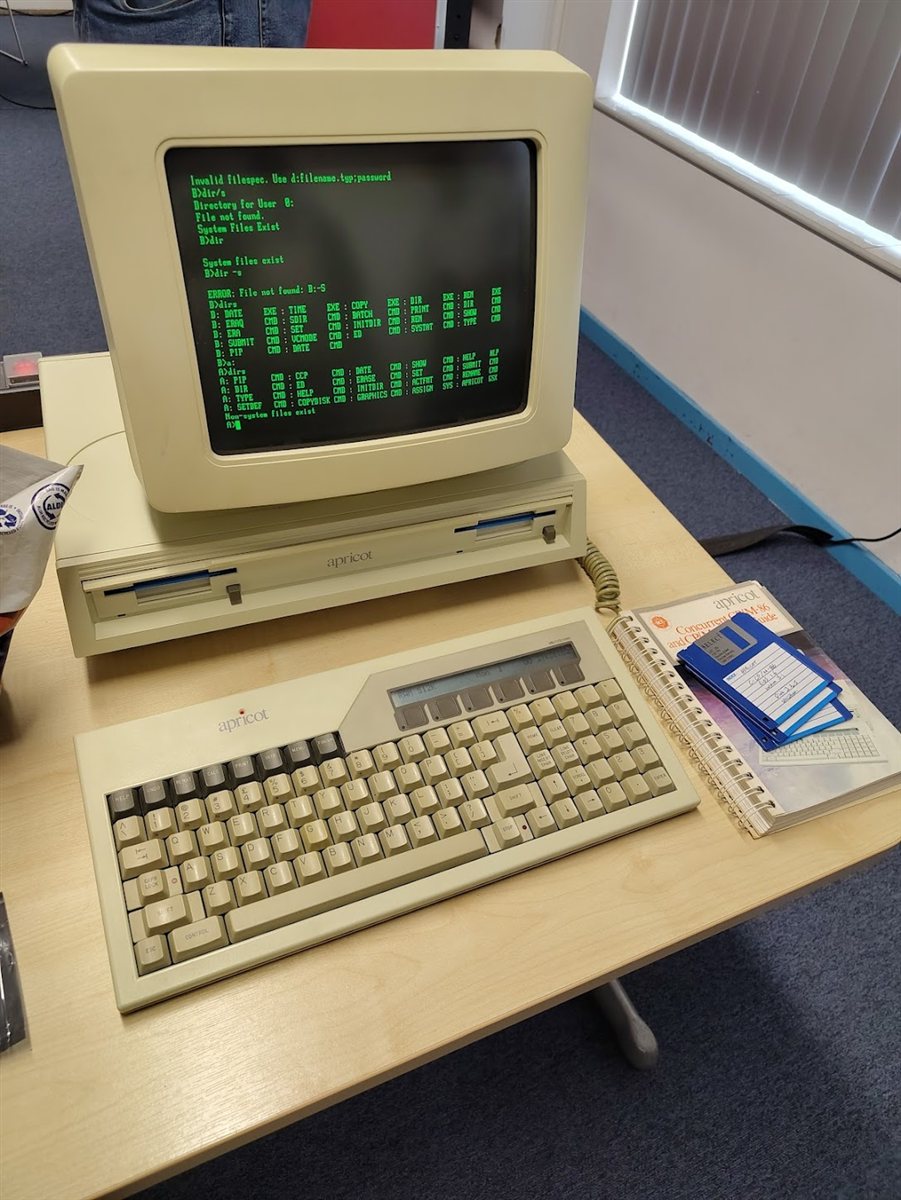
Apricot PC running CP/M-86

Brought by James. An Apricot PC with a lovely green display, running CP/M-86.
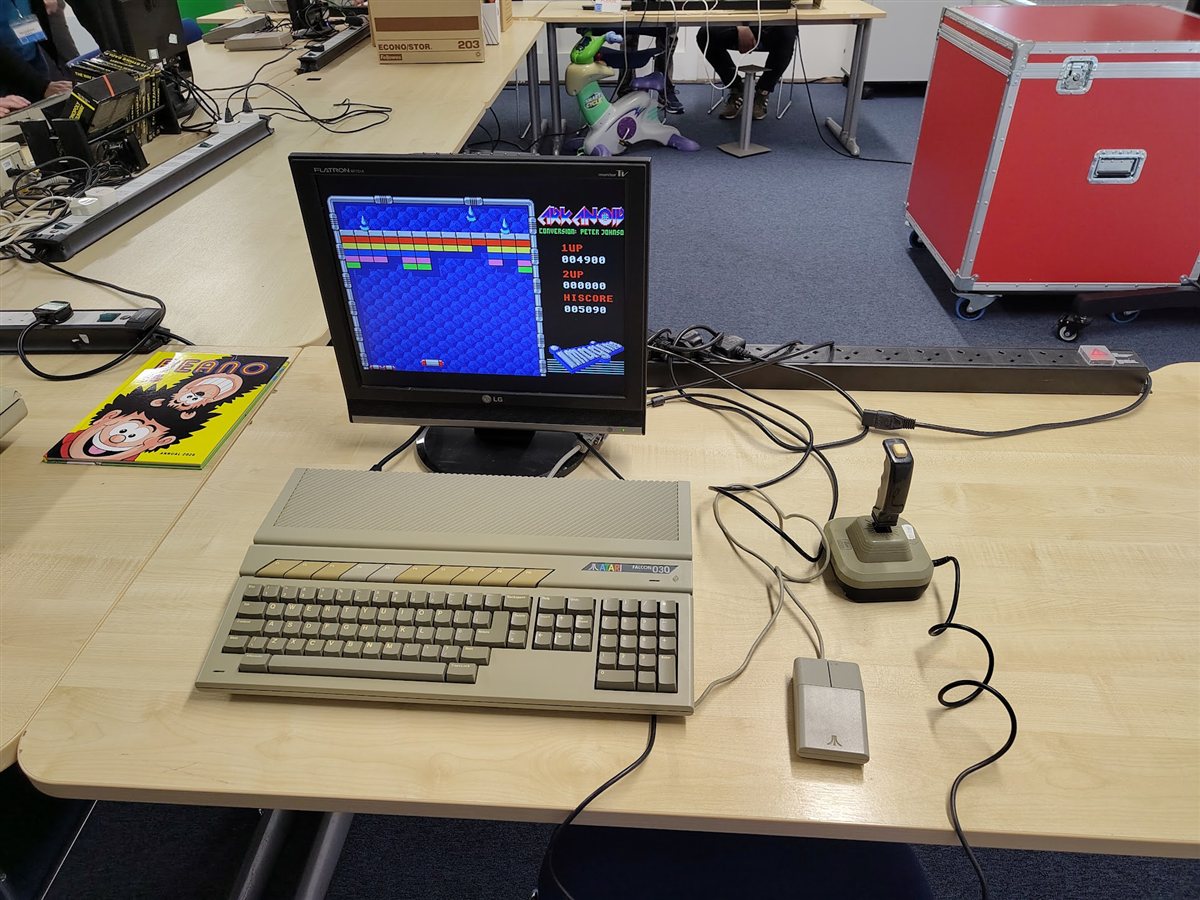
Atari Falcon

From the museum collection. The most rare of Atari wedge computers was not at all stretched by running Arkanoid.
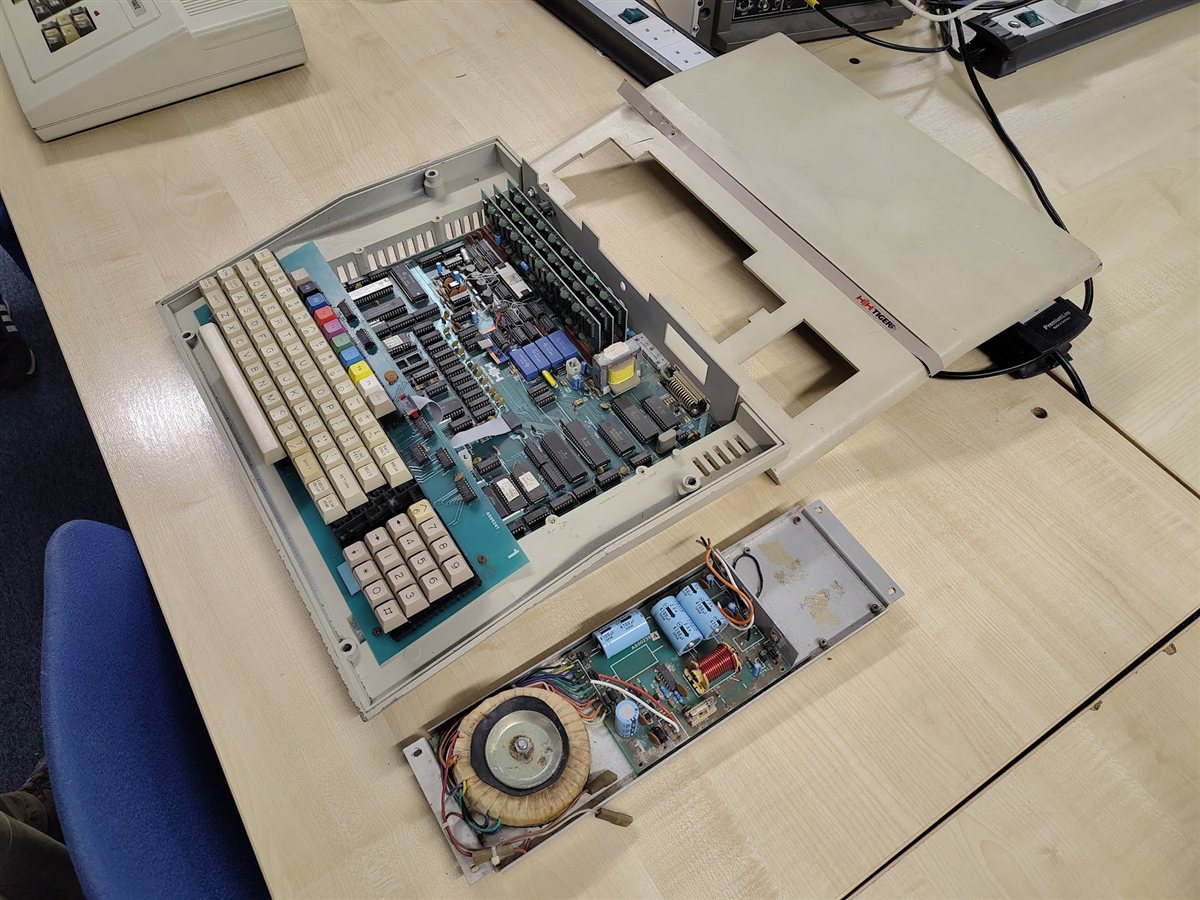
HH Tiger

Brought by Binary Dinosaurs. HH was an electronics company that primarily made amplifiers in Bar Hill near Cambridge. The system was originally designed by Tangerine but sold to HH when they decided it was too expensive to produce. HH decided to go forward with it, but their parent company went bust three months later. The system has both a 6809 and a Z80 CPU as well as 96KB of video RAM.
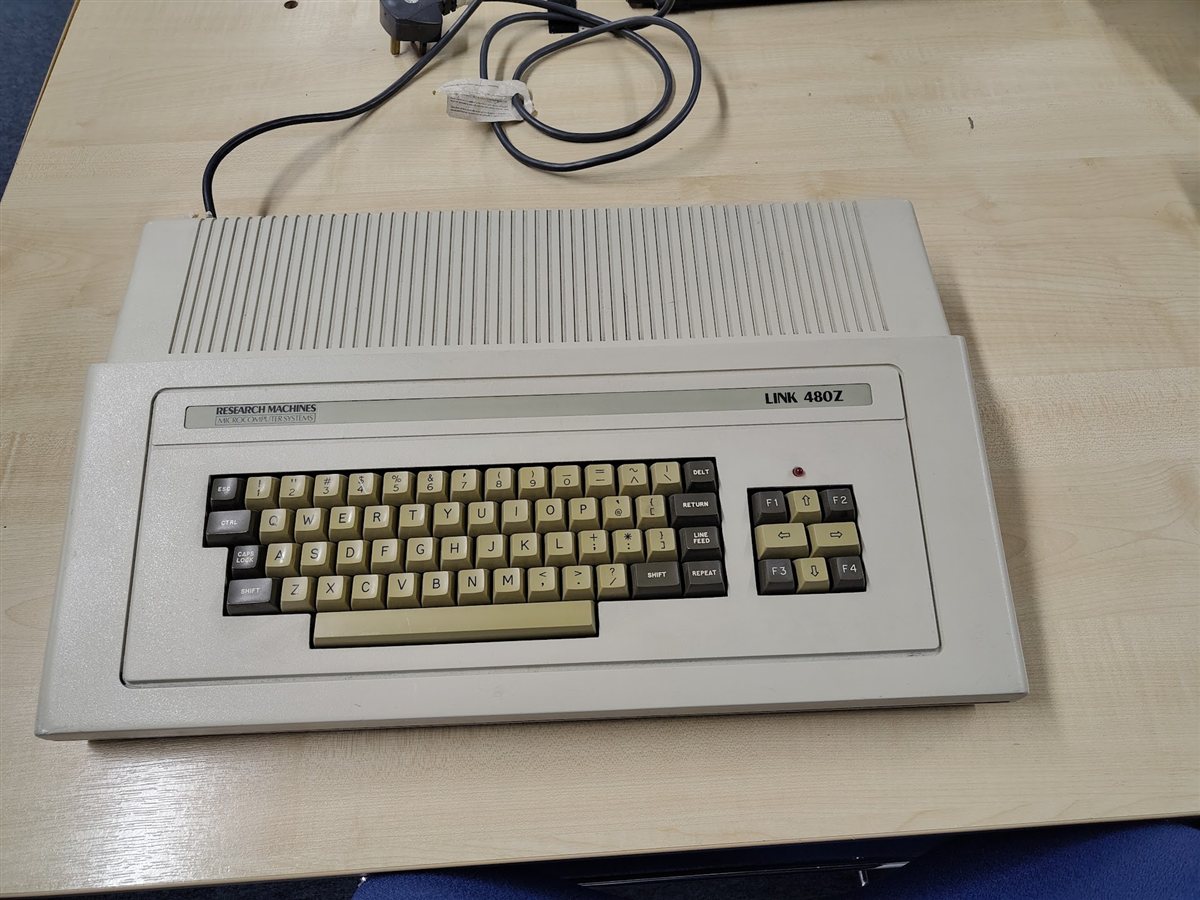
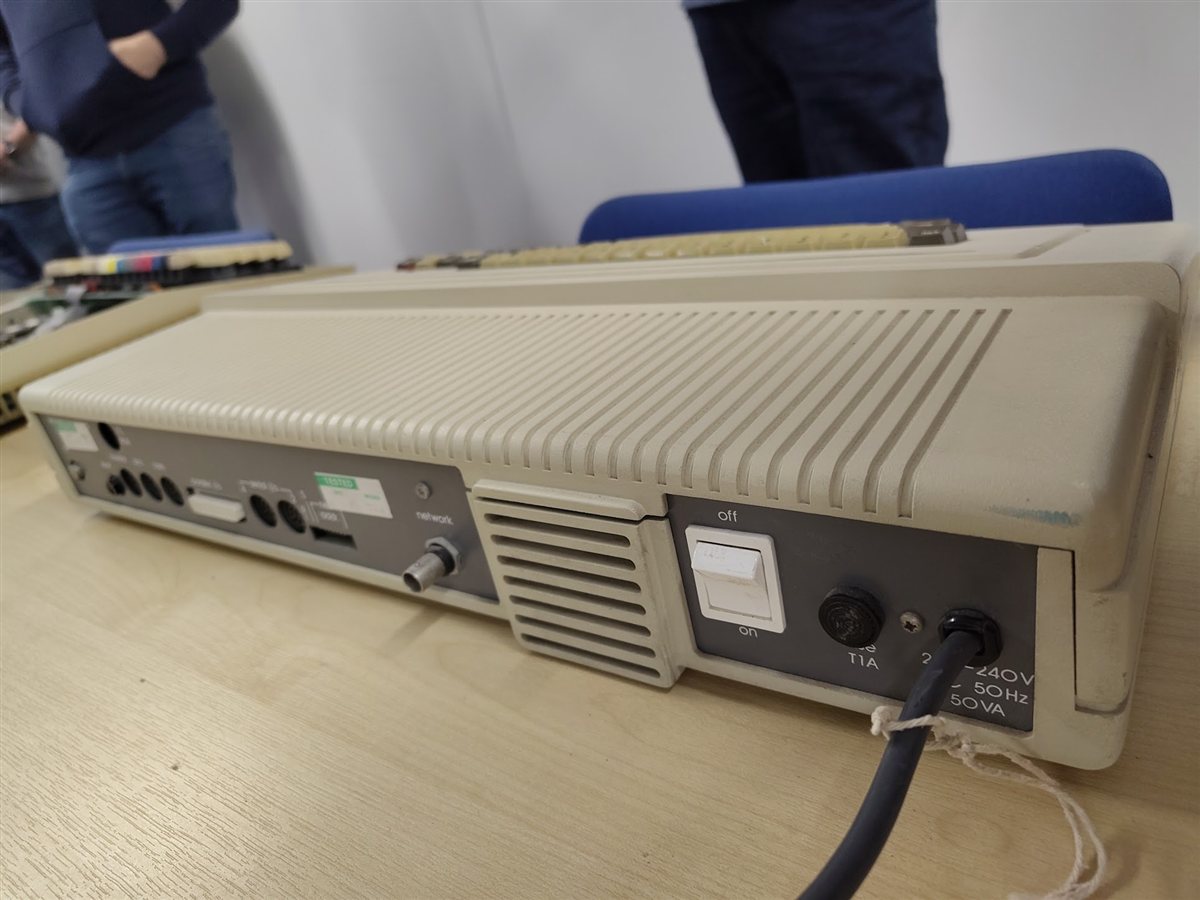
RM Link 480Z

Brought by Binary Dinosaurs. A Z80-based system with up to 256K of RAM aimed primarily as a diskless workstation in the education market.
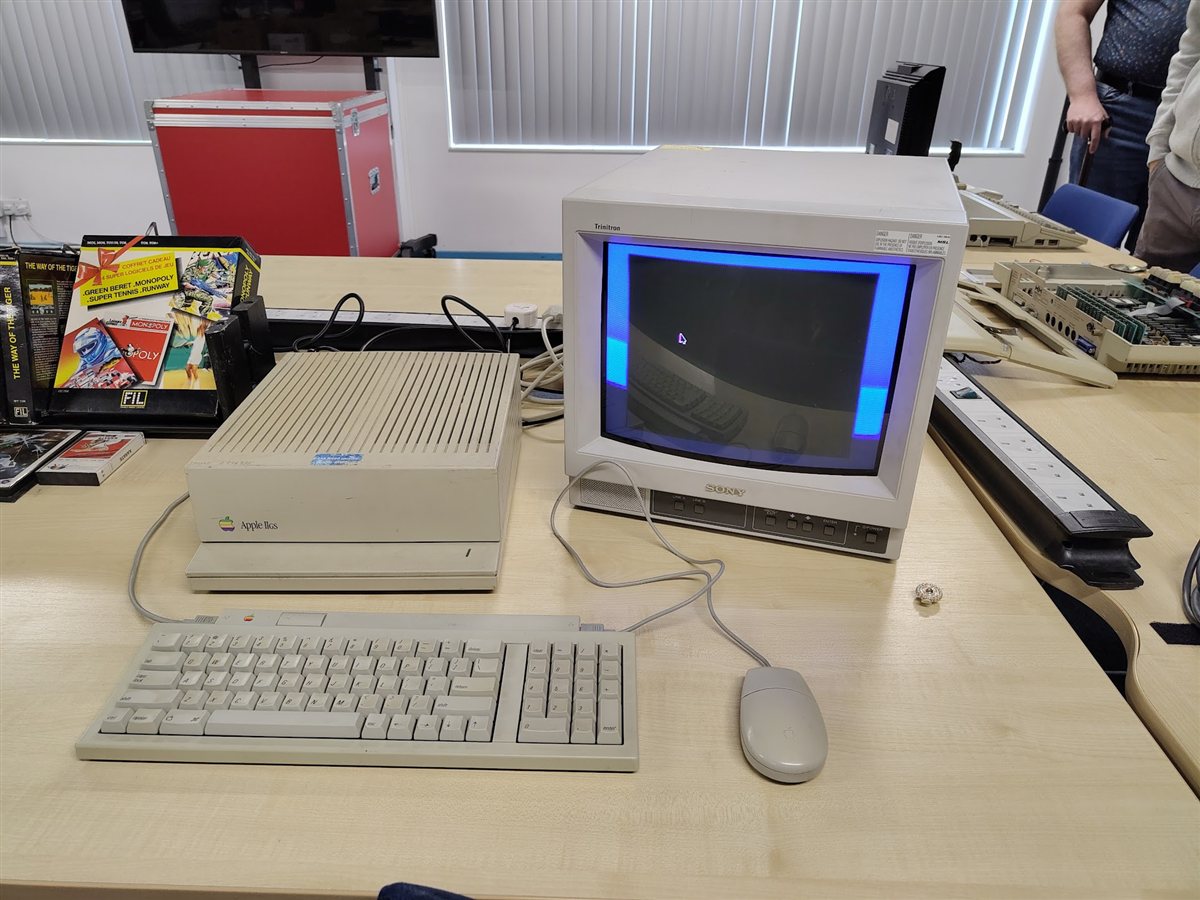
Apple IIGS

Brought by Will. The last in the Apple II line of computers. Demonstrated running Where in the U.S.A. is Carmen Sandiego?
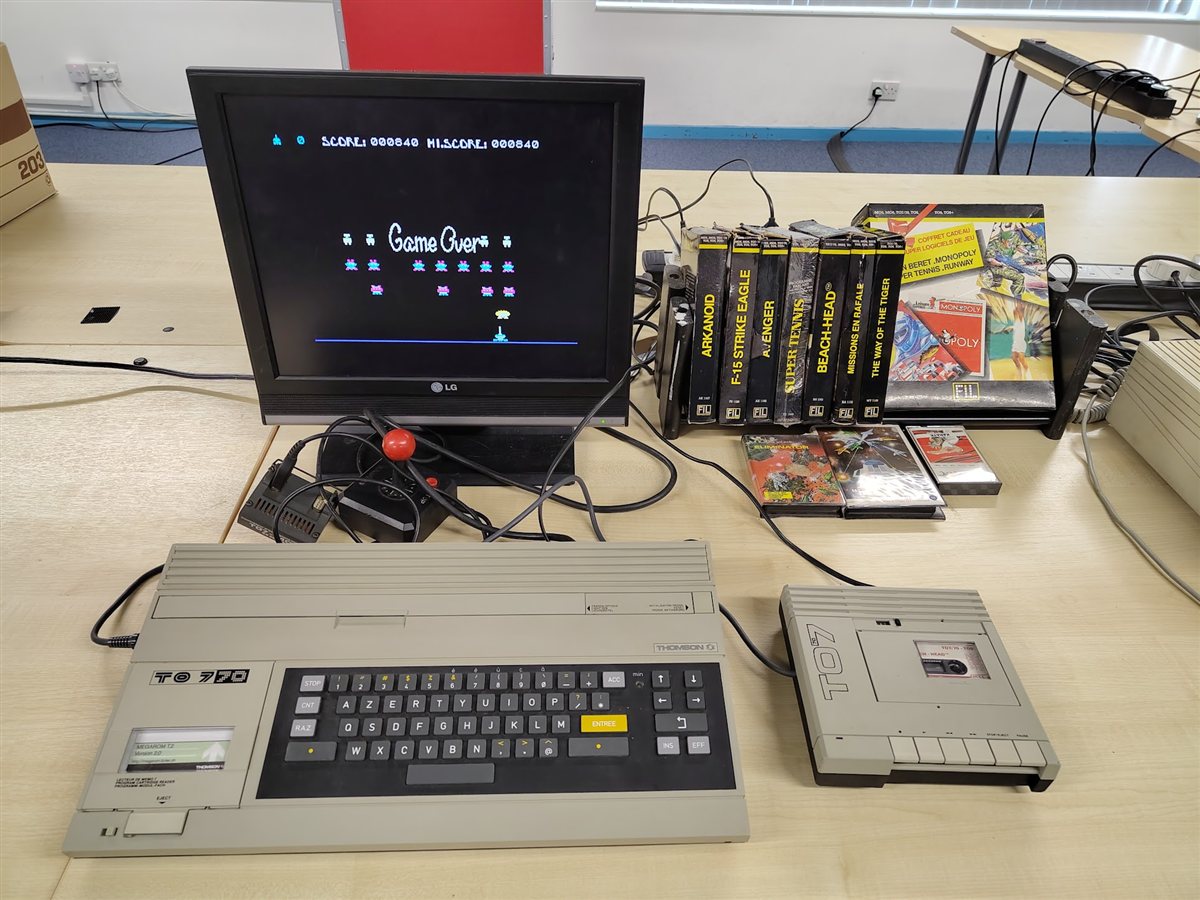
Thomson T07/70

Brought by Adrian. A French computer released in 1984 based around the 6809 CPU. Had considerably upgraded graphics compared to the base T07 model.
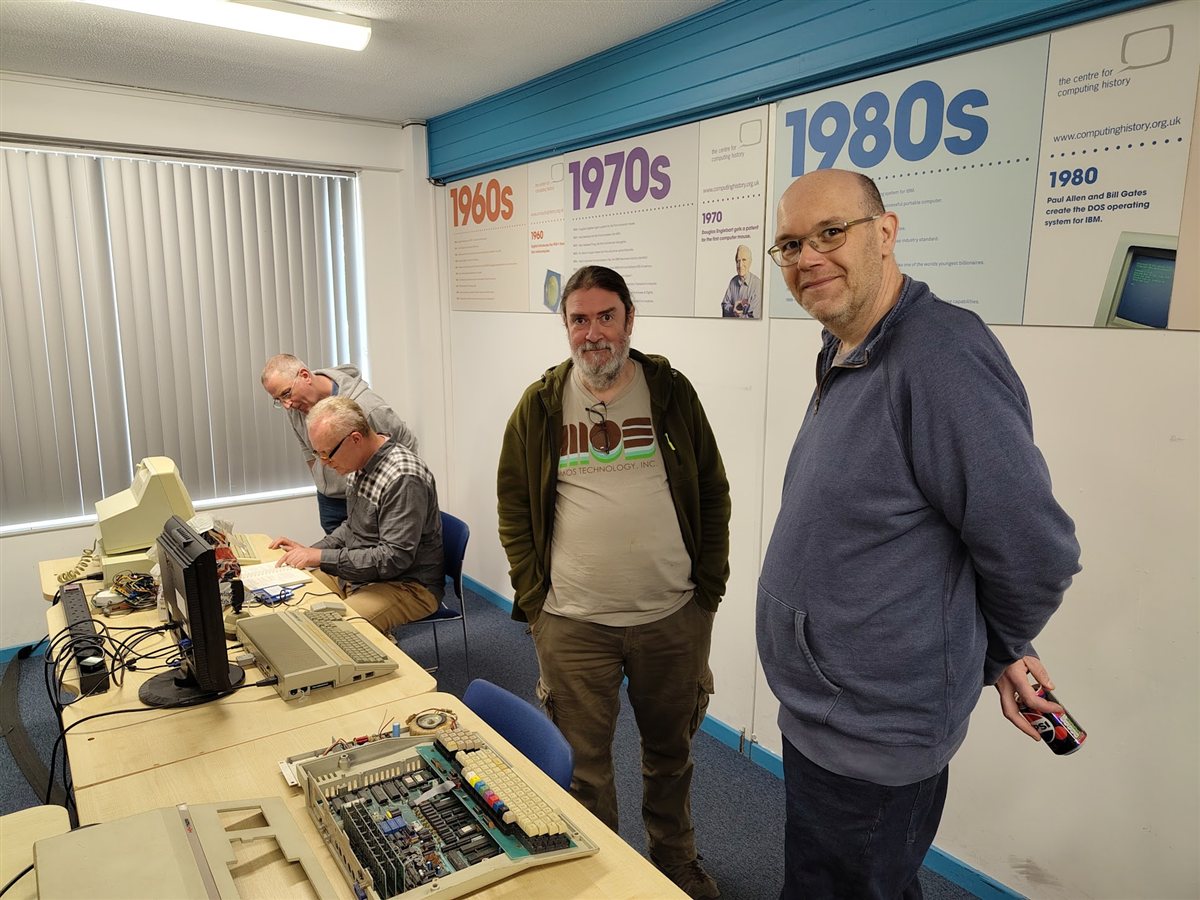
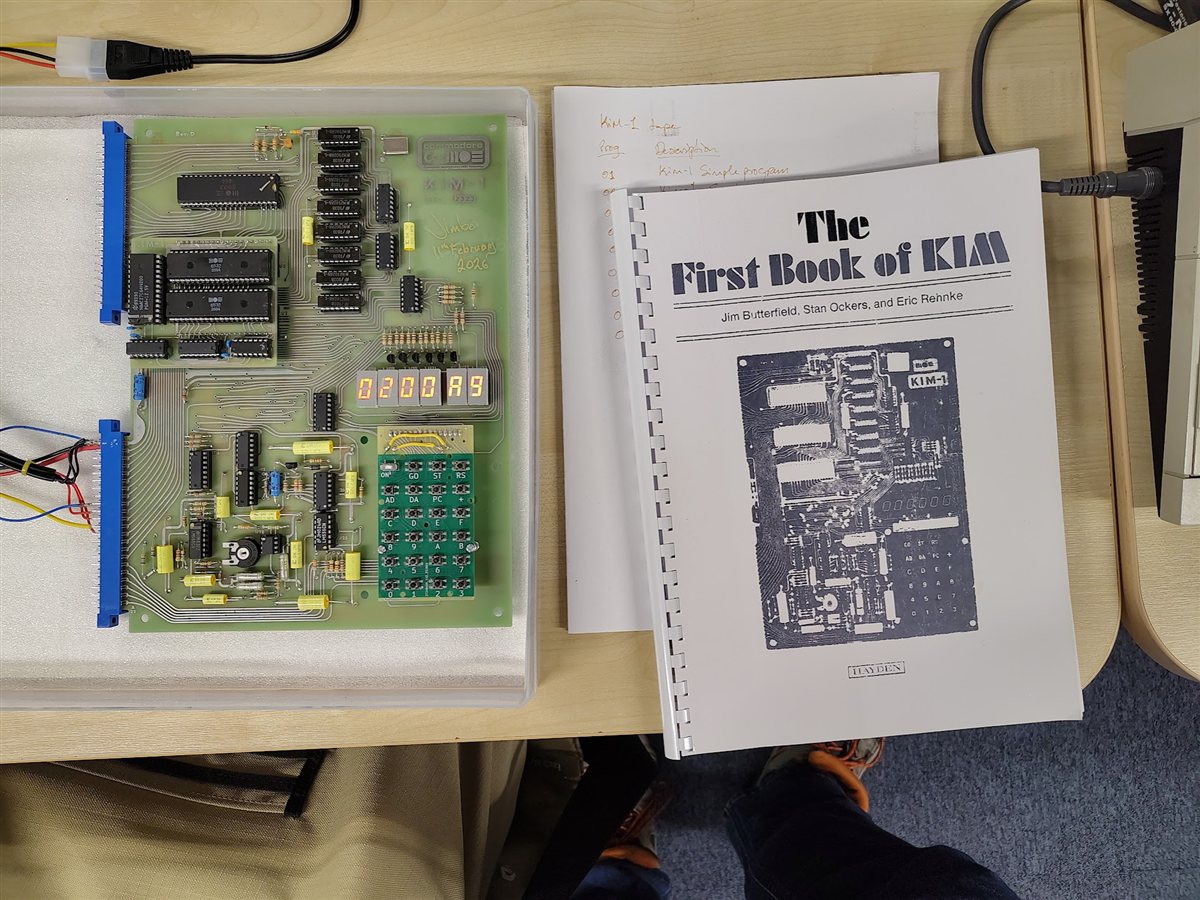
MOS KIM-1

Brought by James. The kit computer predecessor to the Commodore PET.
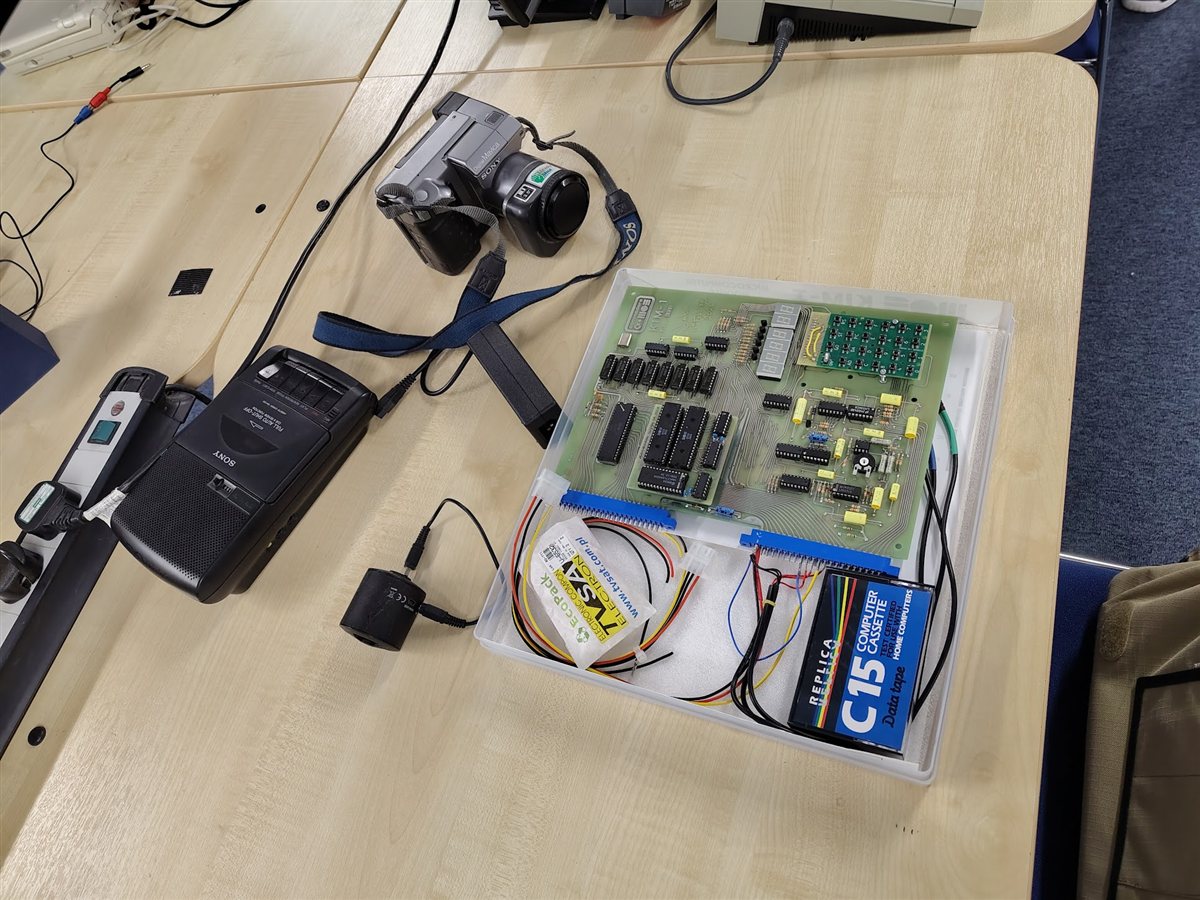
Sony Digital Mavica Camera

Brought by James. The main feature of this series of cameras was that they stored pictures and video directly to 3.5" floppy disk.
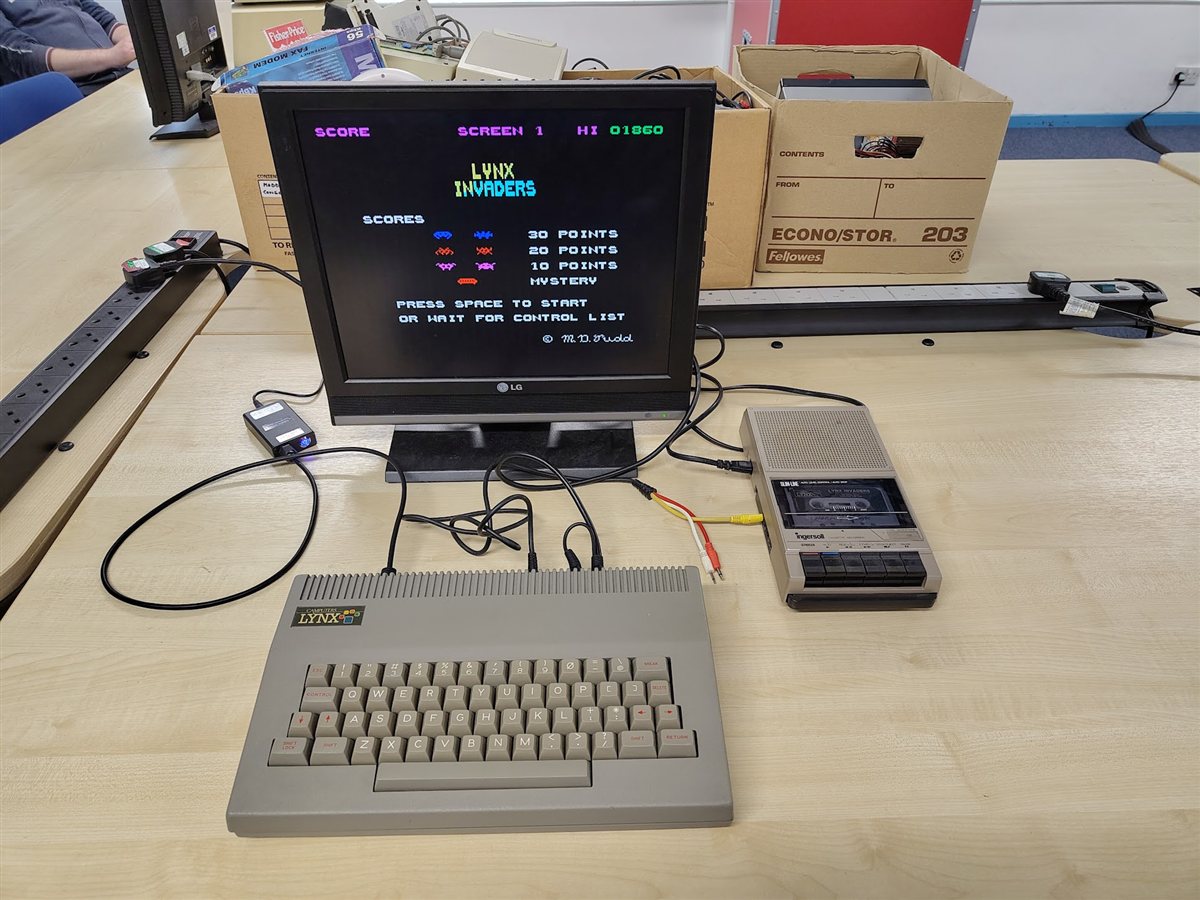
Camputers Lynx

From the museum collection. Designed and built in Cambridge, this unit was running Lynx Invaders — see the Centre for Computing History's interview with the creator.
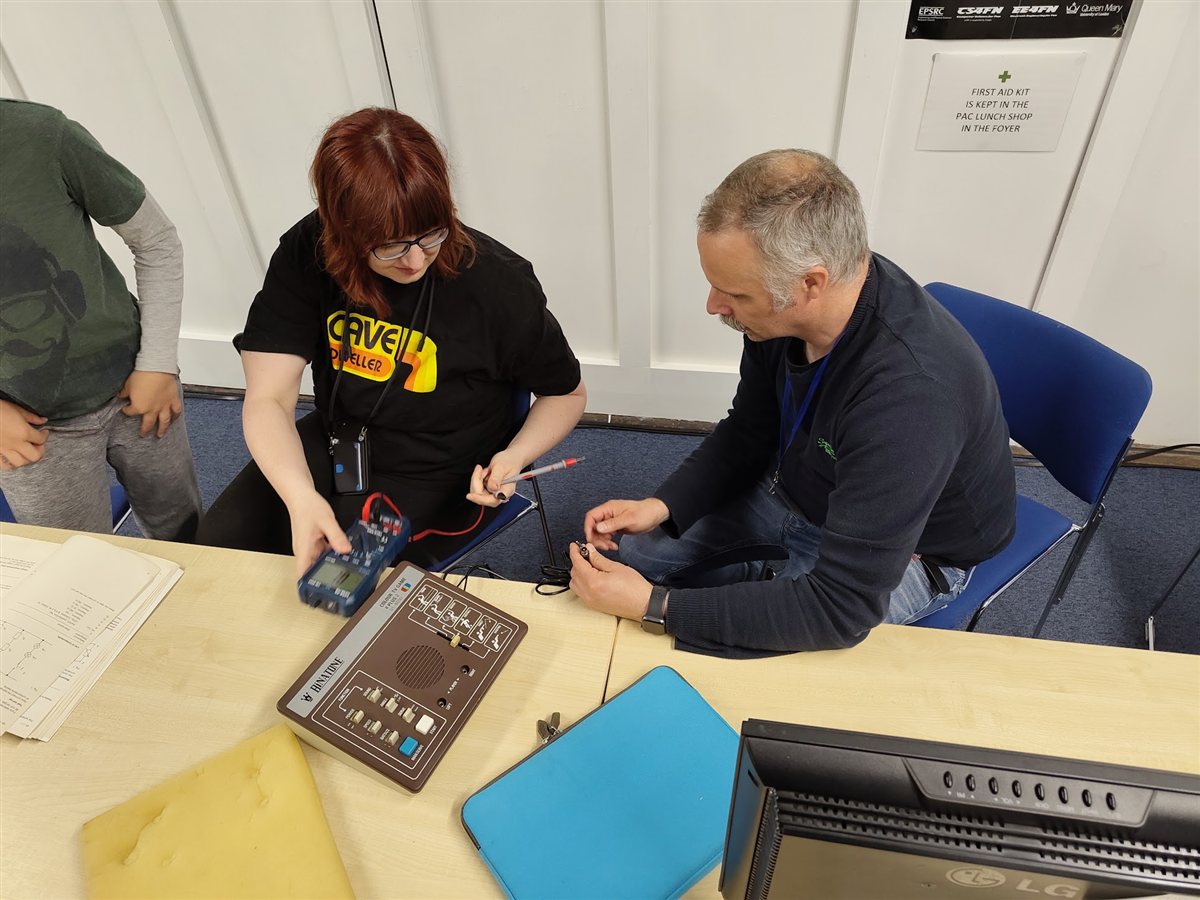
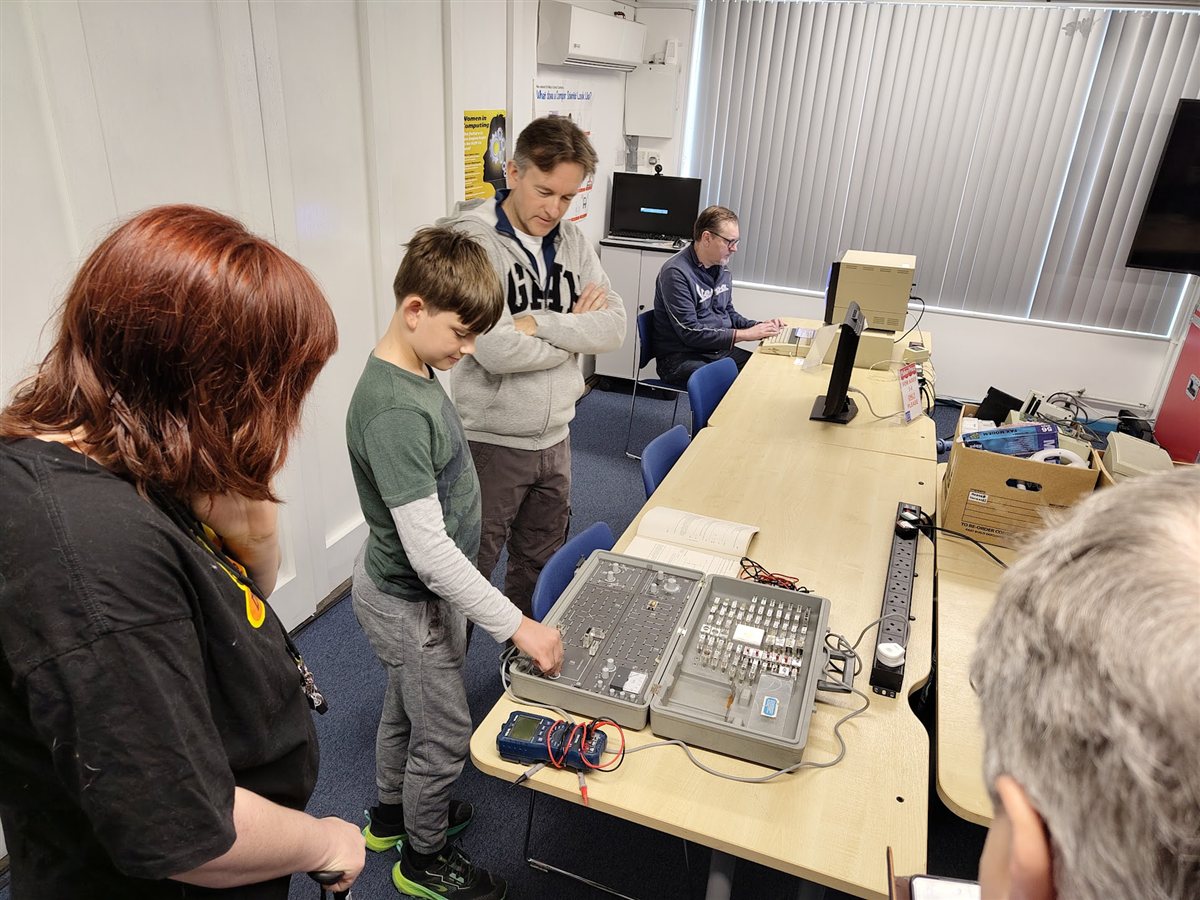
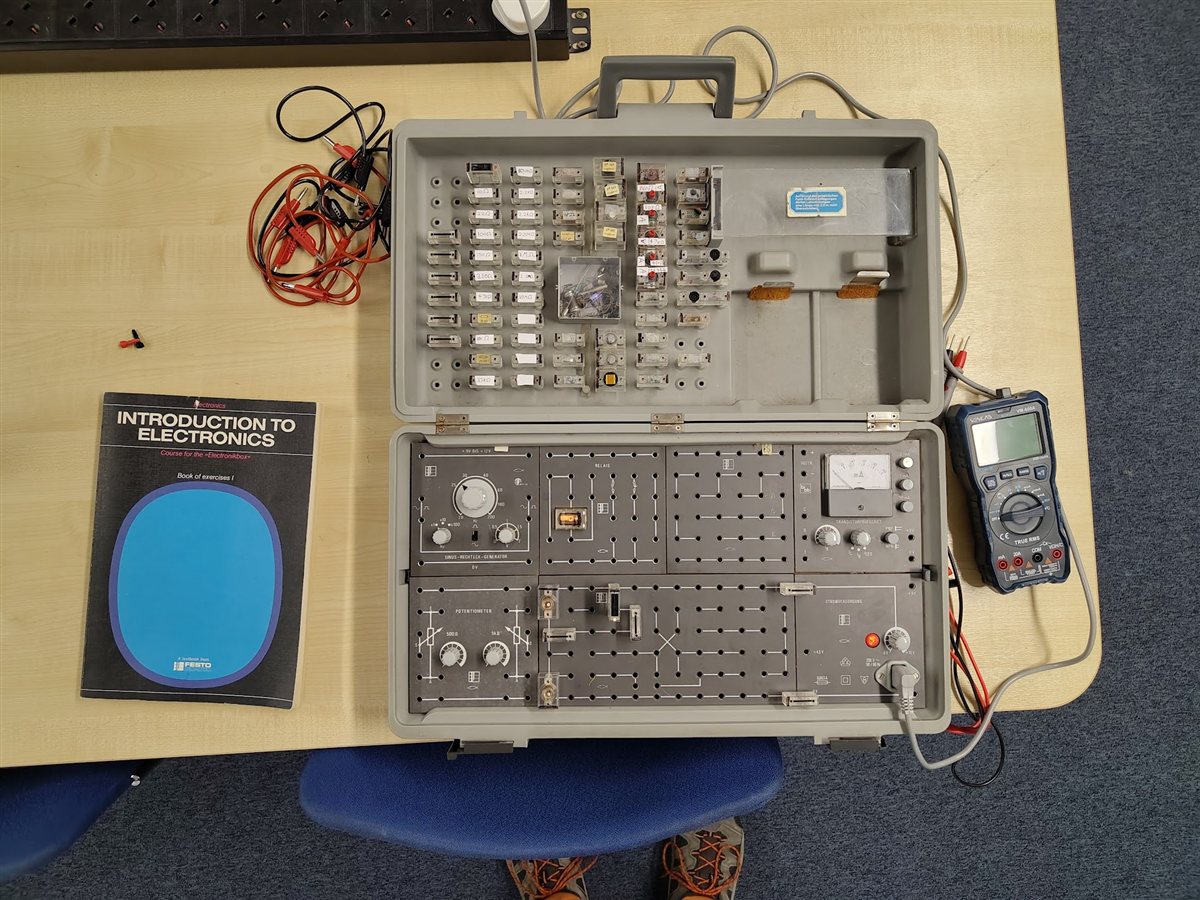
Fischertechnik Elektronik-Box 1000

Brought by Oliver. Produced by Fischertechnik in the 1970s, this unit had been used to train new technicians at nuclear power plants until the previous owner retired.
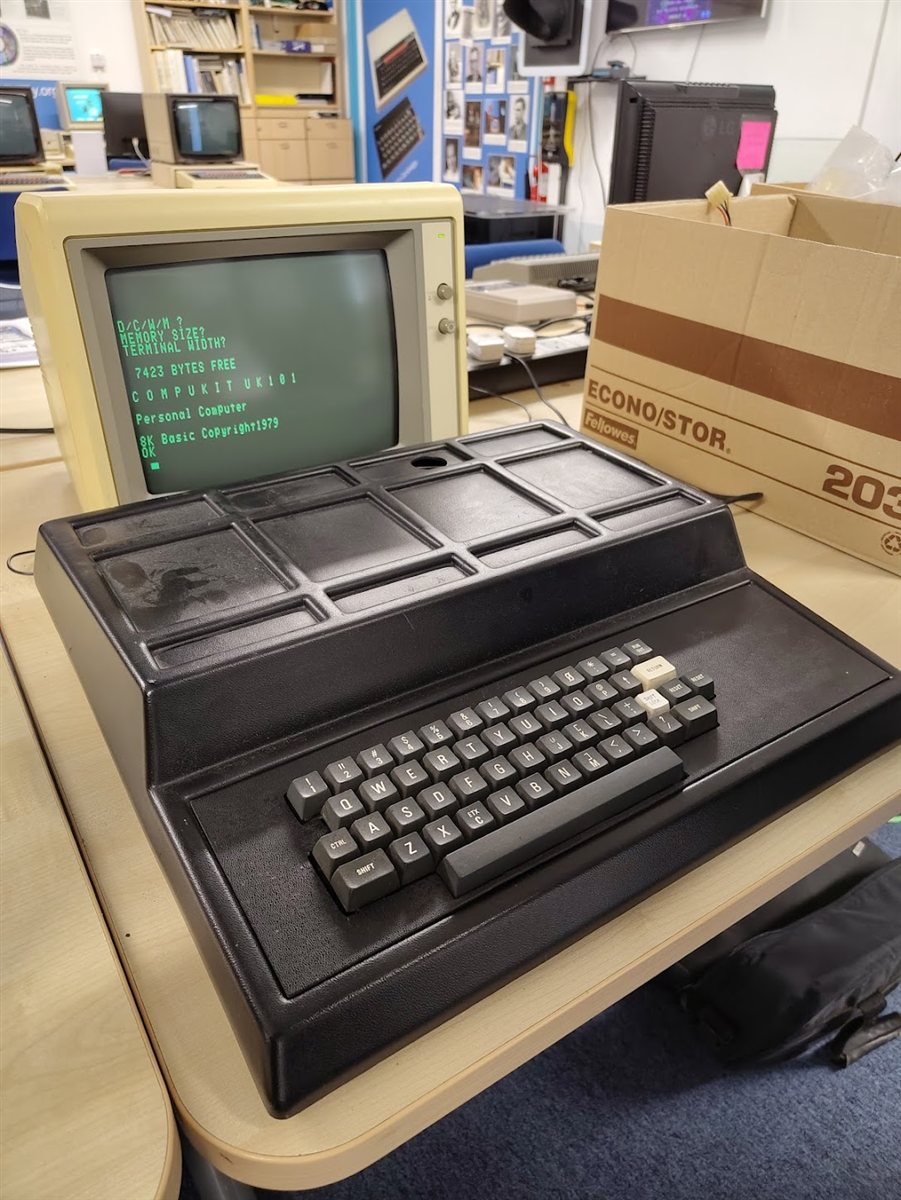
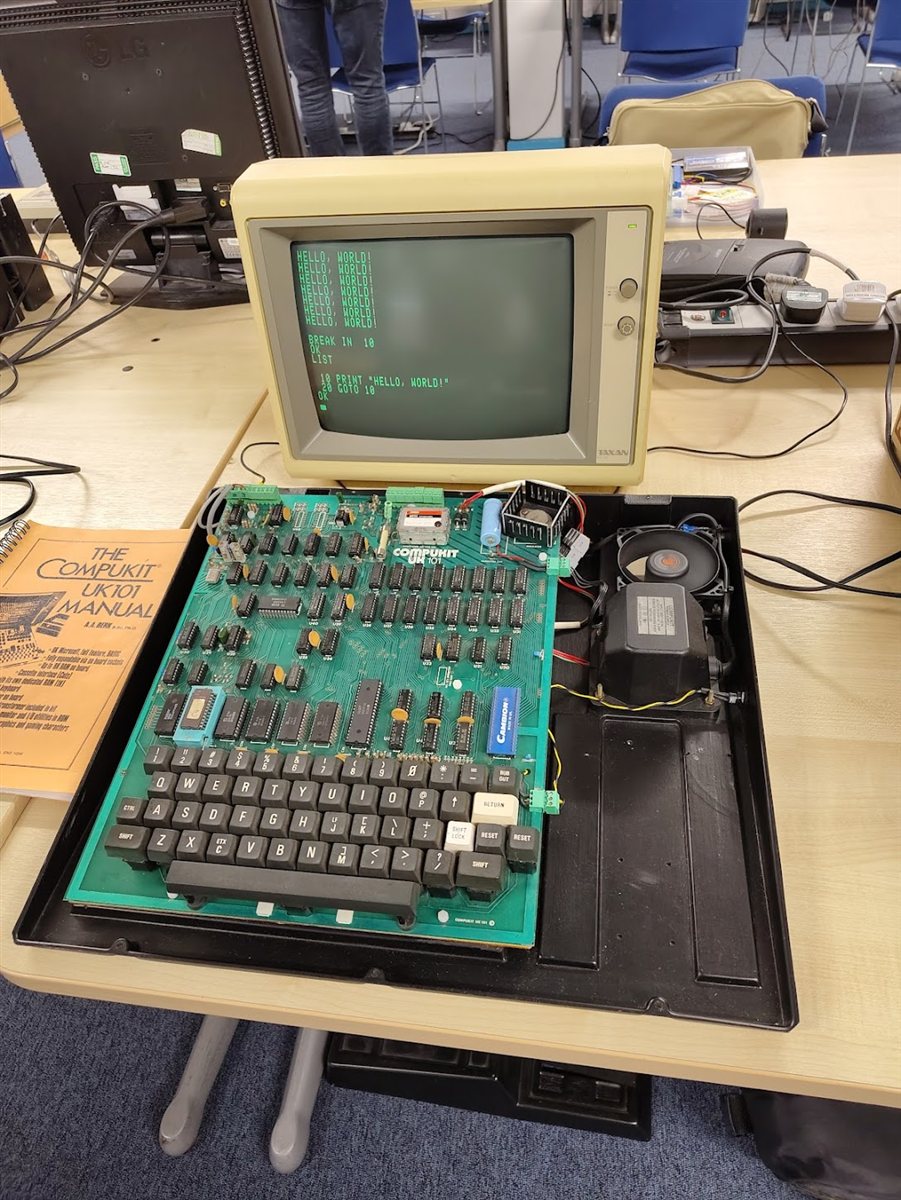
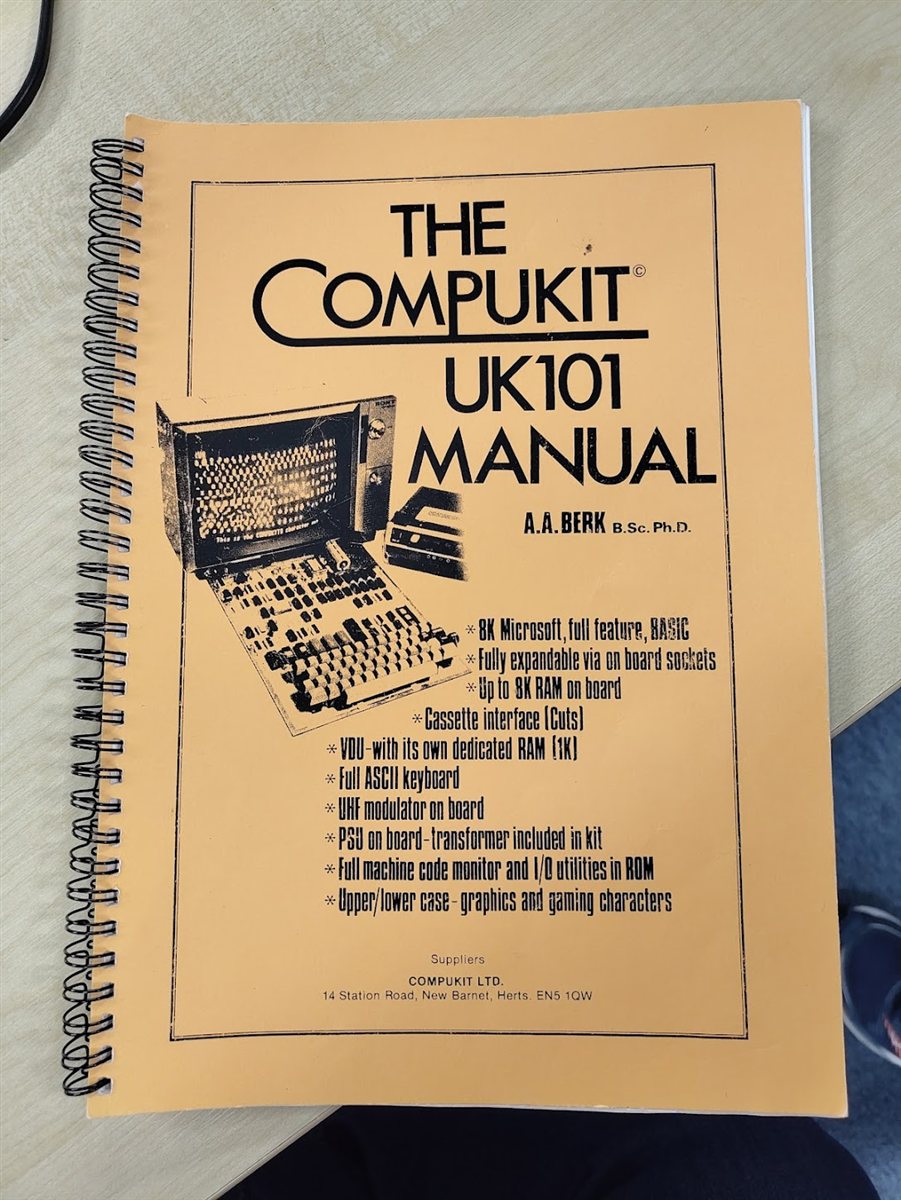
Compukit UK101

A UK PAL adaptation of the Ohio Scientific Superboard II single-board computer, sold by Compukit Ltd of New Barnet. This model was built from a kit by Phil Claydon when he was a computer engineering apprentice at Ferranti Computer Systems in Oldham in the 1980s. The case is not supplied by Compukit and could be used with many of the SBCs available at that time.
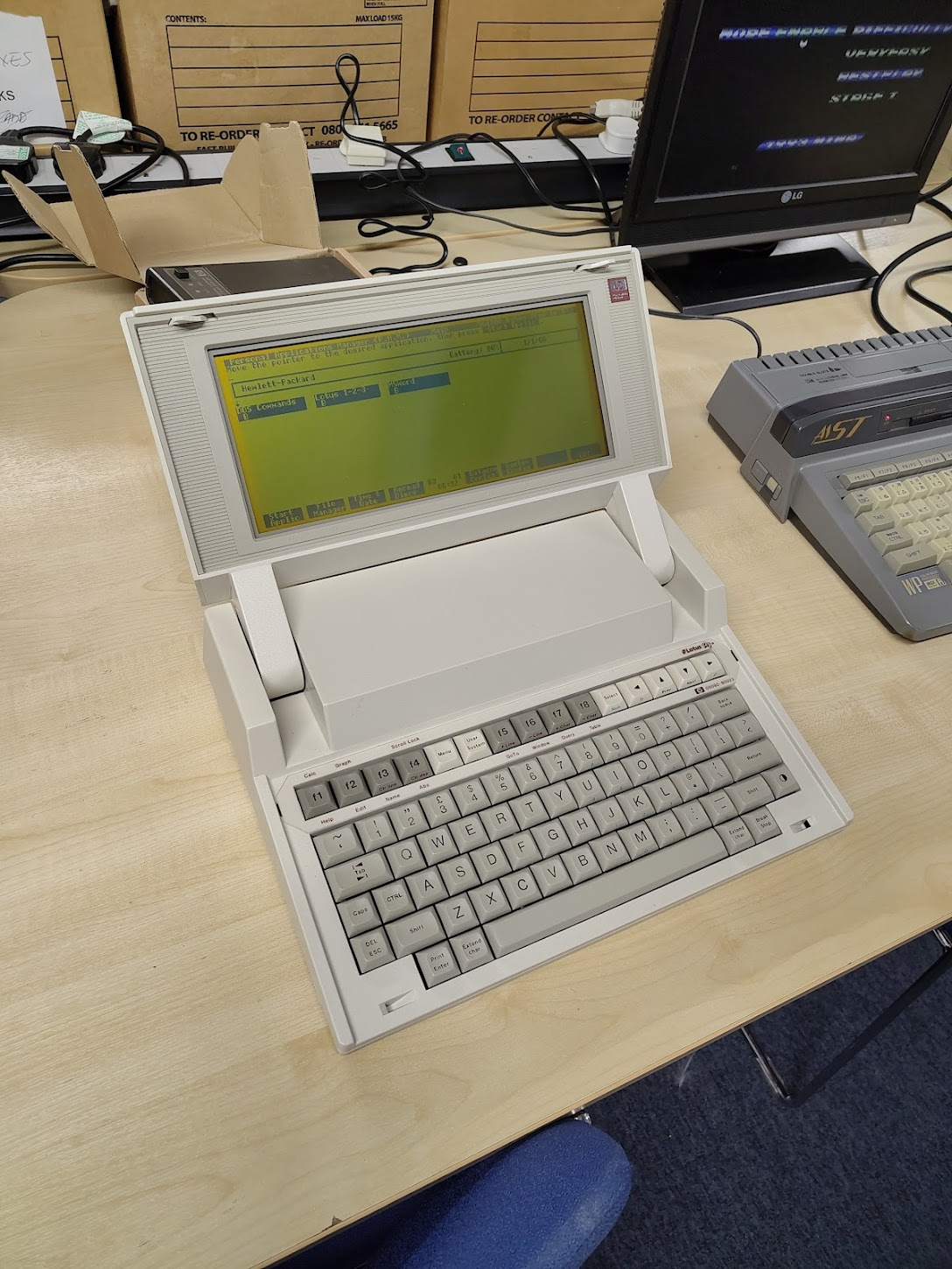
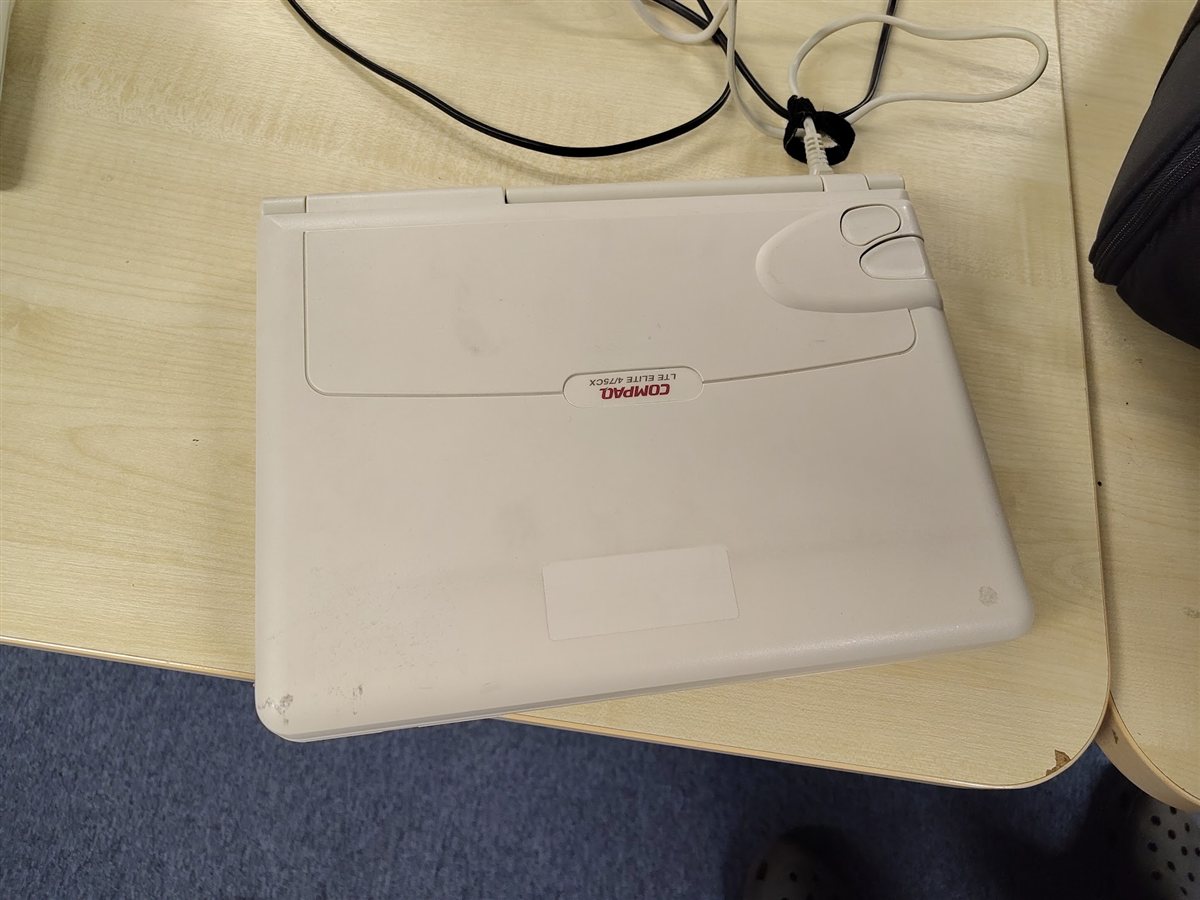
Compaq LTE Elite 4/75CX

Brought by Henry. A laptop with an Intel 486 DX4 processor running at 75MHz, with a 640×480 TFT LCD display — running Wolfenstein 3D very nicely. This particular one is fitted with a custom-designed and 3D-printed floppy drive emulator in the battery bay, featuring a large OLED display.
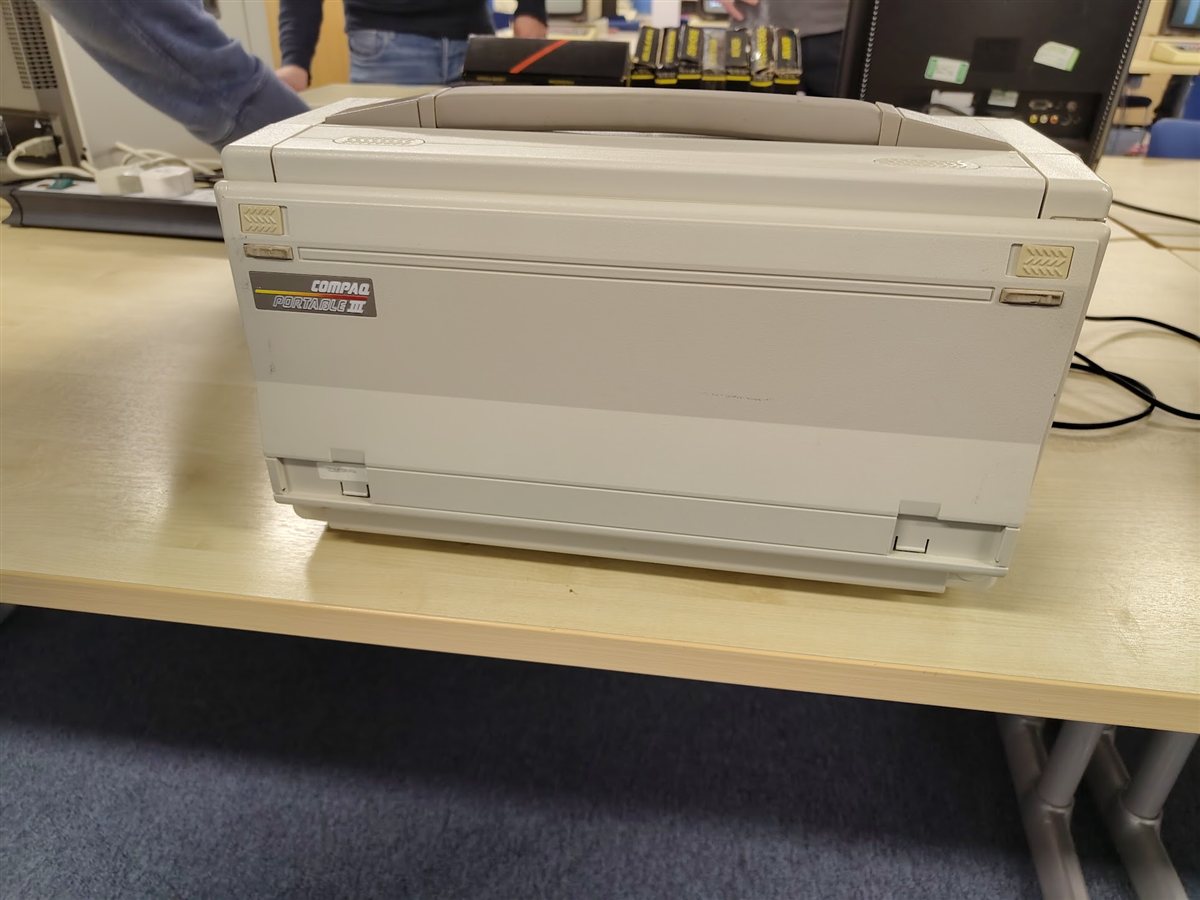
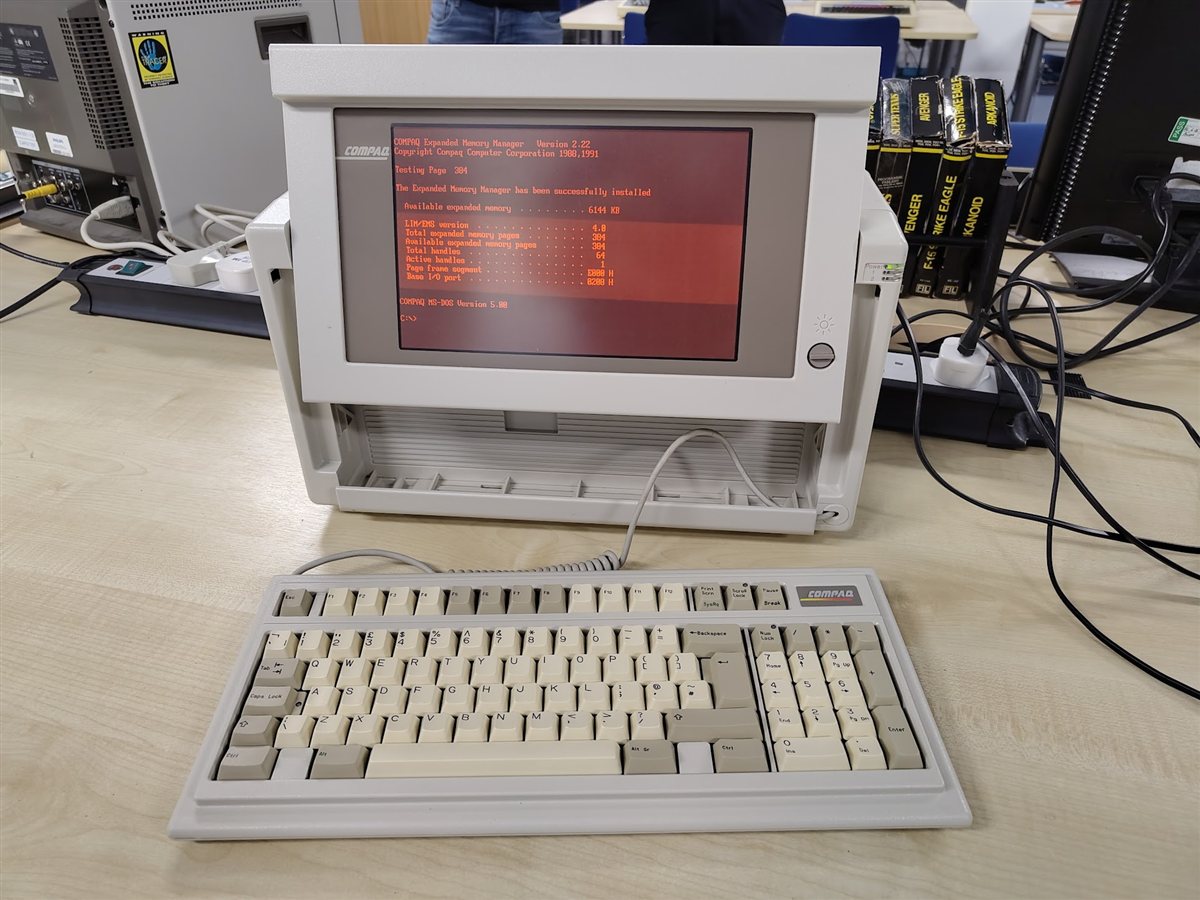
Compaq Portable III

Brought by Henry. Third in the line of theoretically portable computers from Compaq. Seems to like travelling — it wasn't working until Henry gave it a ride in the car to the museum.
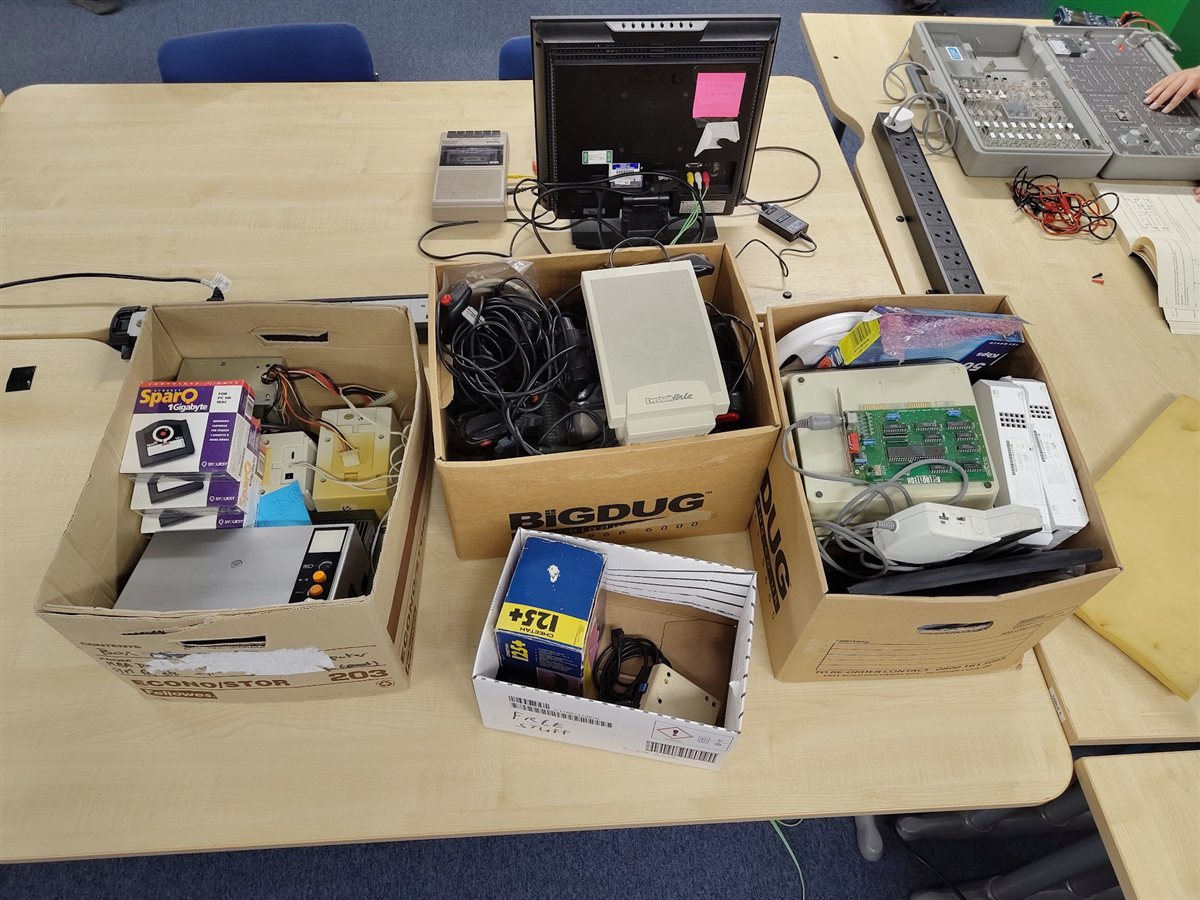
Free Stuff!

At each meetup there is a table of stuff the museum is trying to get rid of — grab what you want to take home.
Meeting #3

8th February, 2026

Cambridge Centre for Computing History

In the room

  • Too many people to mention!

On the tables

Meeting Summary

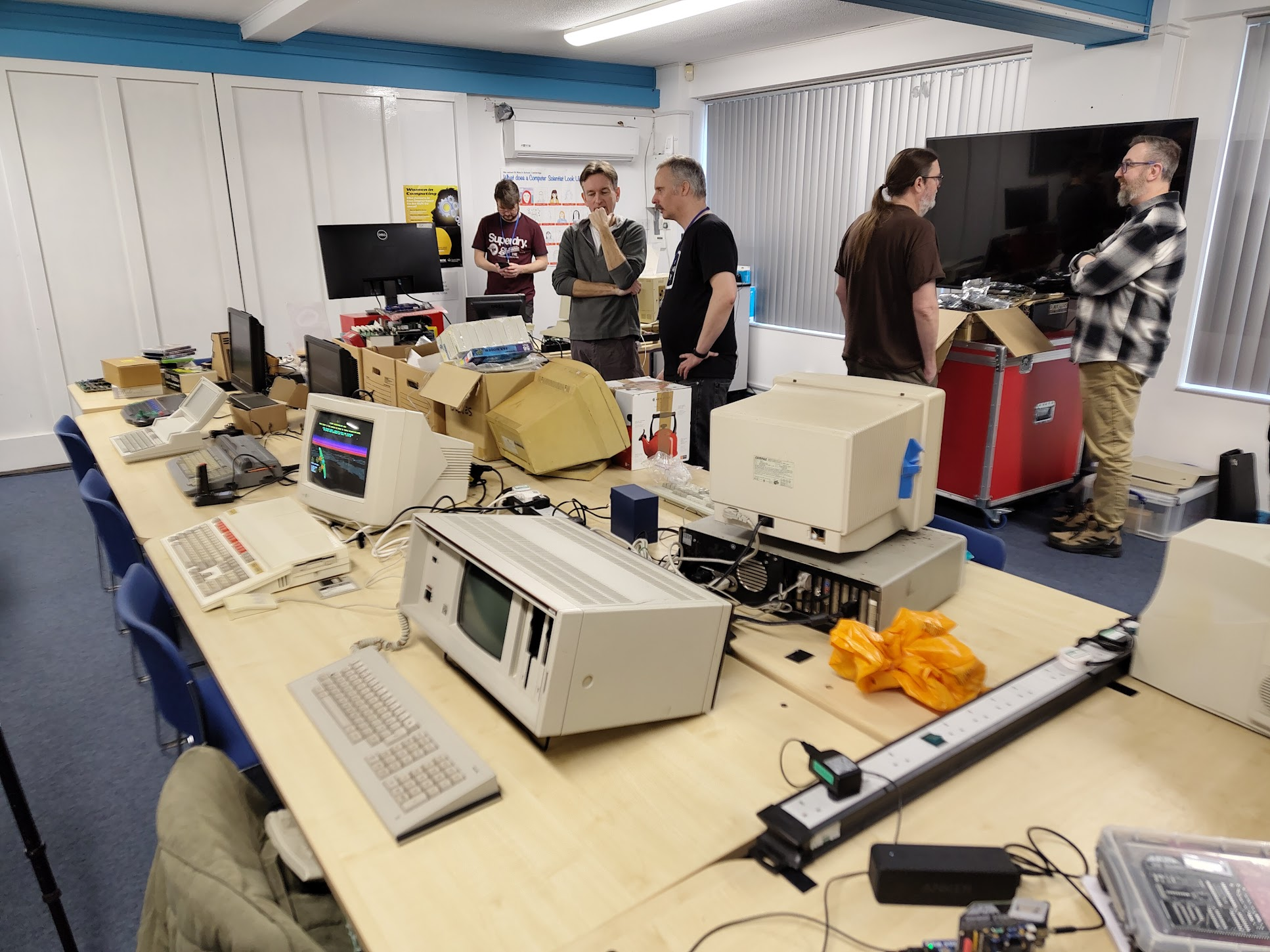
The first of these meets to be fully advertised, this was the busiest one so far — many people brought interesting things to show, and there was lots of free stuff being given away!

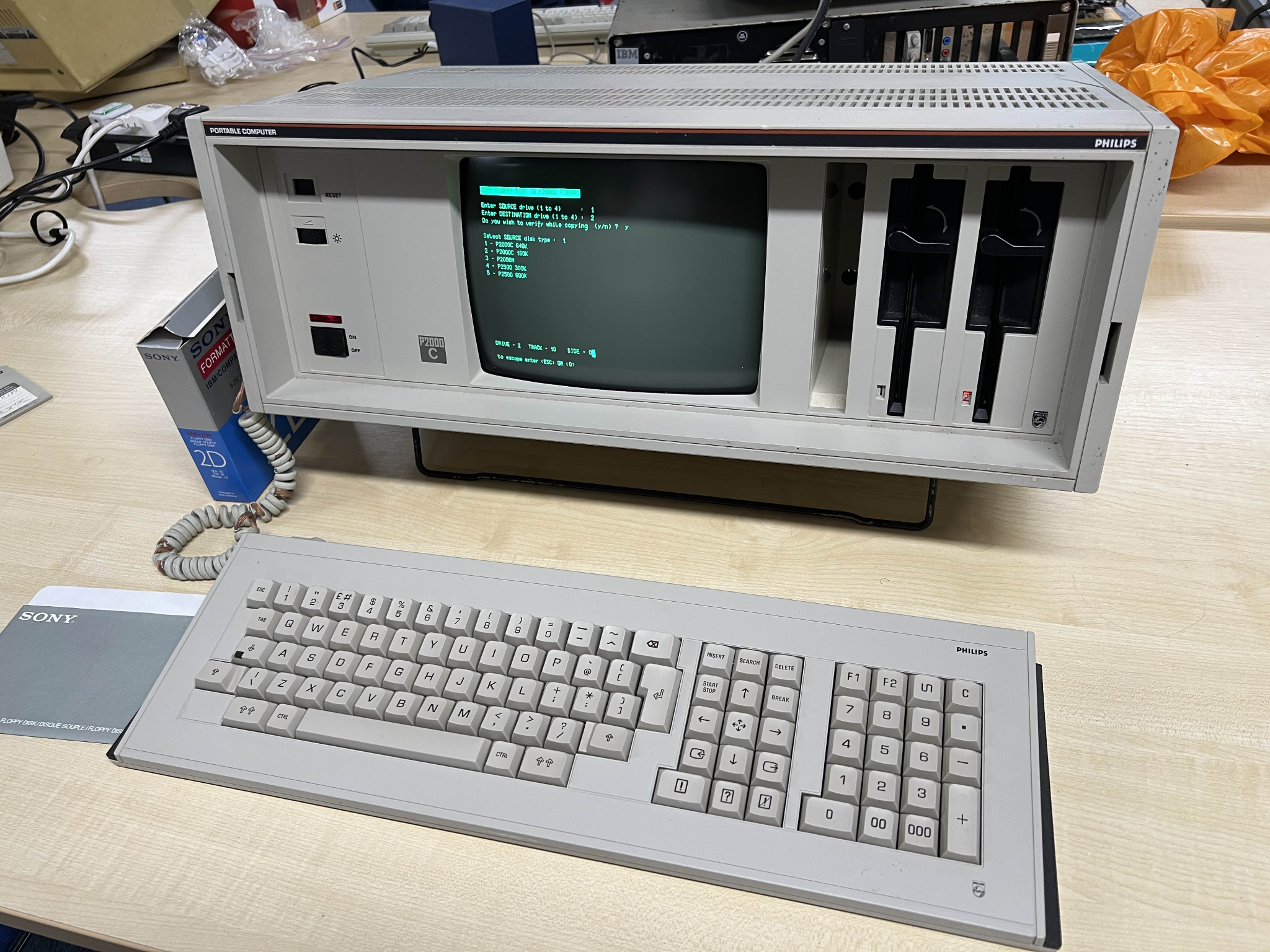
Philips P2000C

Brought by Binary Dinosaurs. A luggable — but at 15kg, only if you had a cast iron shoulder. 64k RAM running CP/M 2.2 or UCSD p-System (Pascal). Unique in luggable terms because it's two machines in one: the Z80 compute side with a SASI HDD interface, and a Z80-powered serial terminal.

Acorn A3000

Brought by Will — the last "BBC Microcomputer" with a BBC logo on the keyboard. Recently restored after needing repair from internal battery leakage.

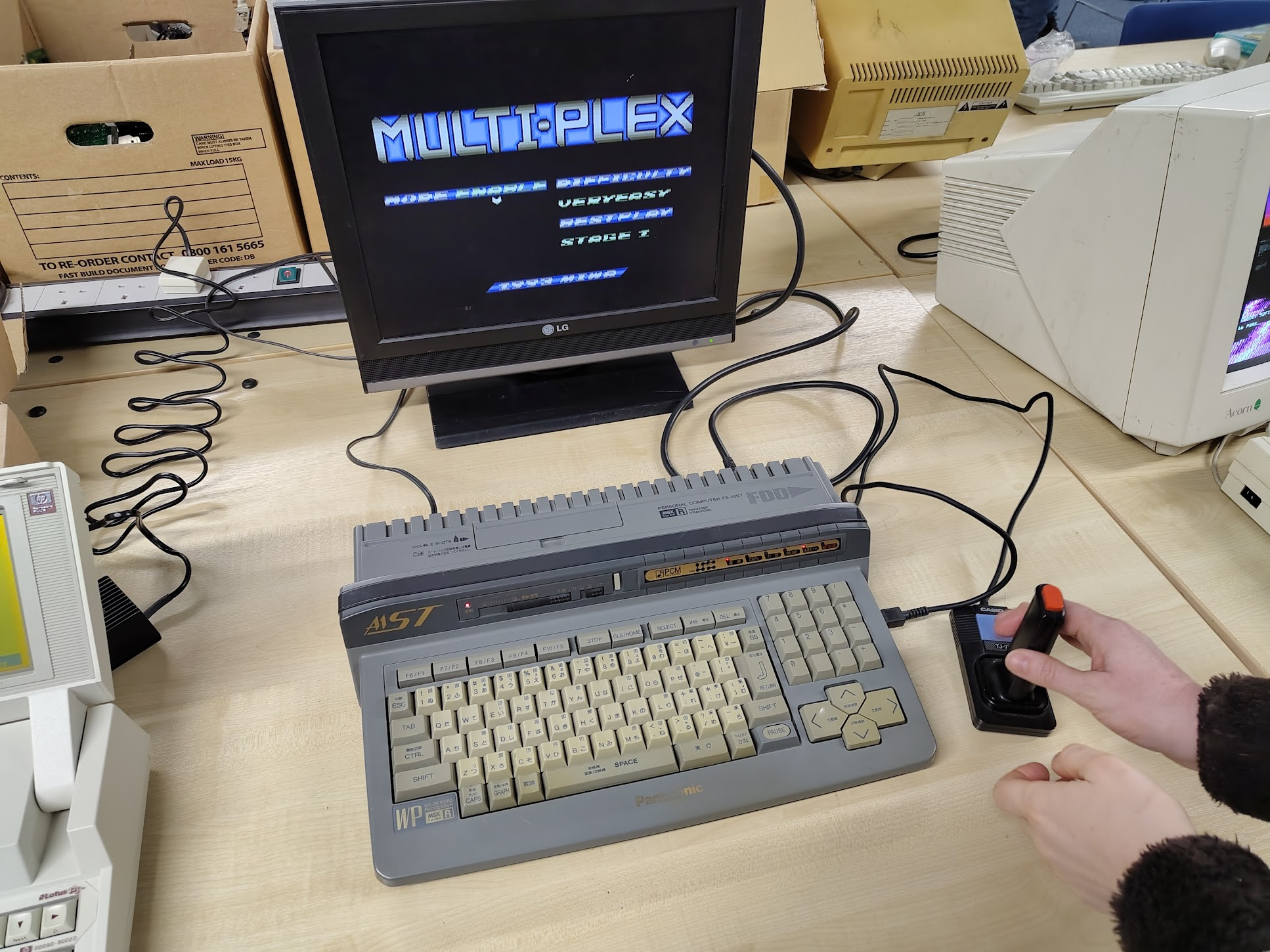
Panasonic FS-A1ST (MSX Turbo R)

Brought by Adrian. The last of the MSX family, featuring a huge memory upgrade to 256k and a notable dual-processor design: the usual Z80 plus the much faster R800. Older games often have hacks to run at more than double speed using the R800 — when active, a light appears on the dashboard. Also features two cartridge ports, a fast 2DD disk drive, PCM sound, and a full word processor suite built in.

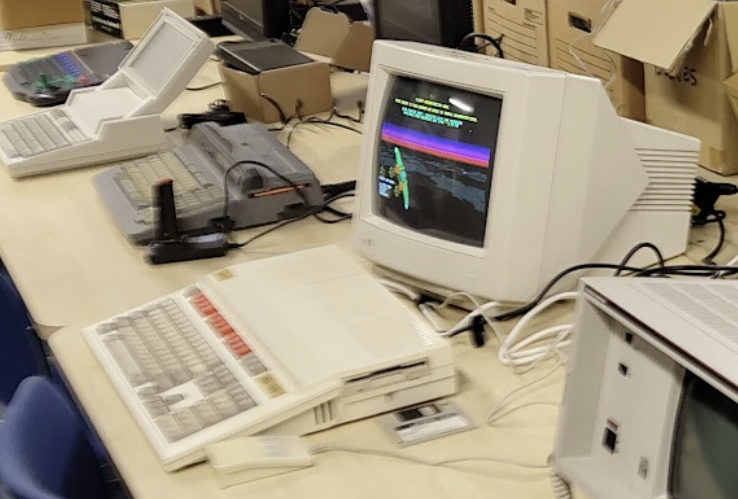
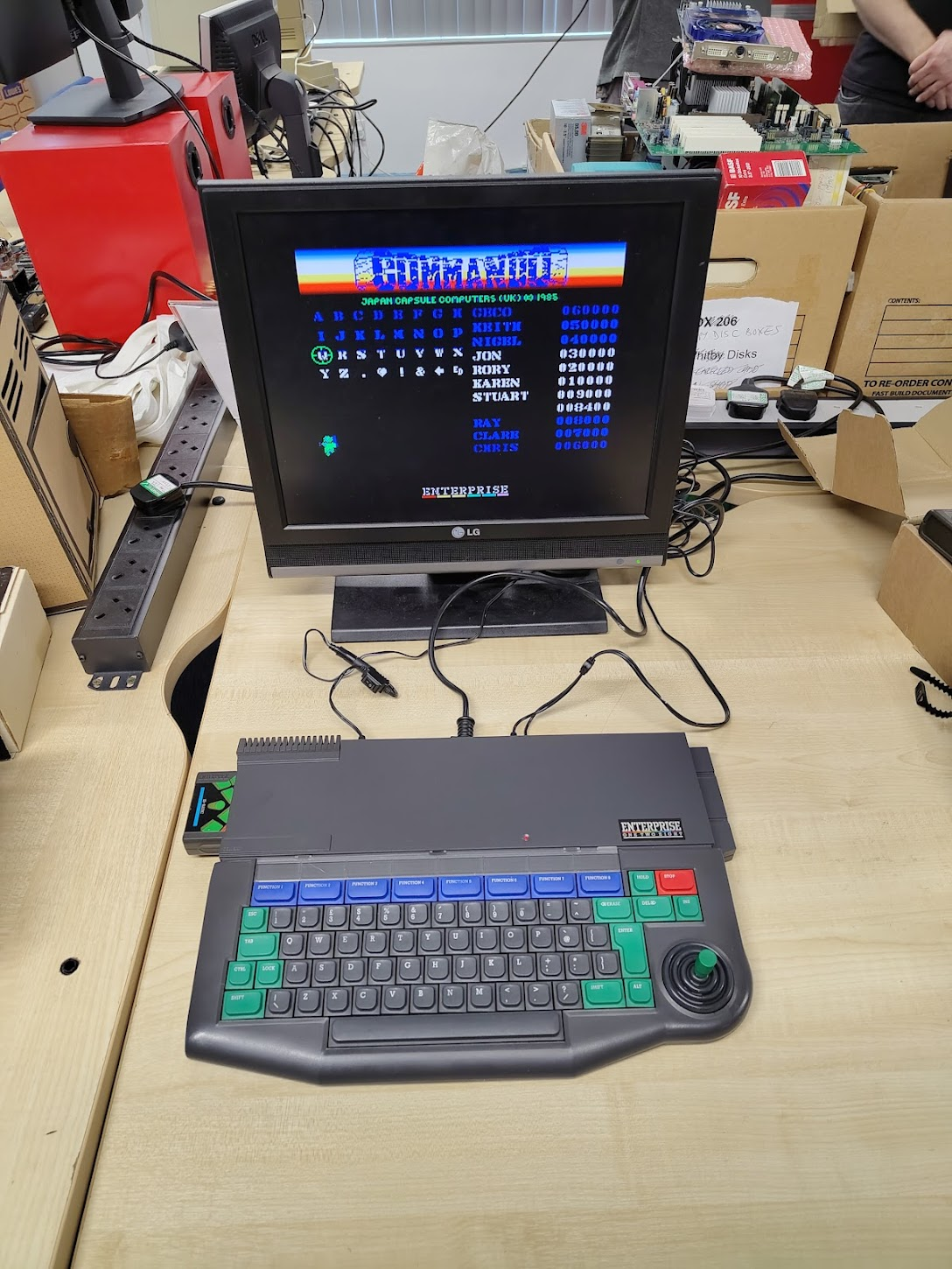
Enterprise 128

From the museum collection. A powerful 8-bit machine notable for its flat profile, inbuilt joystick, and striking colourful design. Sadly released far too late — around the time of the Atari ST in 1985. More successful in Eastern Europe, where the 128k has enjoyed homebrew support with hundreds of titles ported from the Spectrum and Amstrad.

IBM PC XT 286 (IBM 5162)

Henry's IBM 5162 — an interesting transitional design bridging the gap between the original XT and later AT-class machines, upgraded with a 2MB RAMPack and a custom GOTEK complementing the standard 1.2MB floppy drive.

Nascom 2

One of the museum's current projects — trying to assemble a working Nascom.

Home-brew 65c02 Computer

A 65c02 homebrew built to the RCBus standard, mostly wire-wrapped on vero board. The backplane uses standard header sockets for cards, with GAL16v20s as glue logic simulating Z80 signals (MEMREQ, IOREQ) so Z80 IO-based RC2014 cards work too. Big plans ahead — the main one being multi-user access.

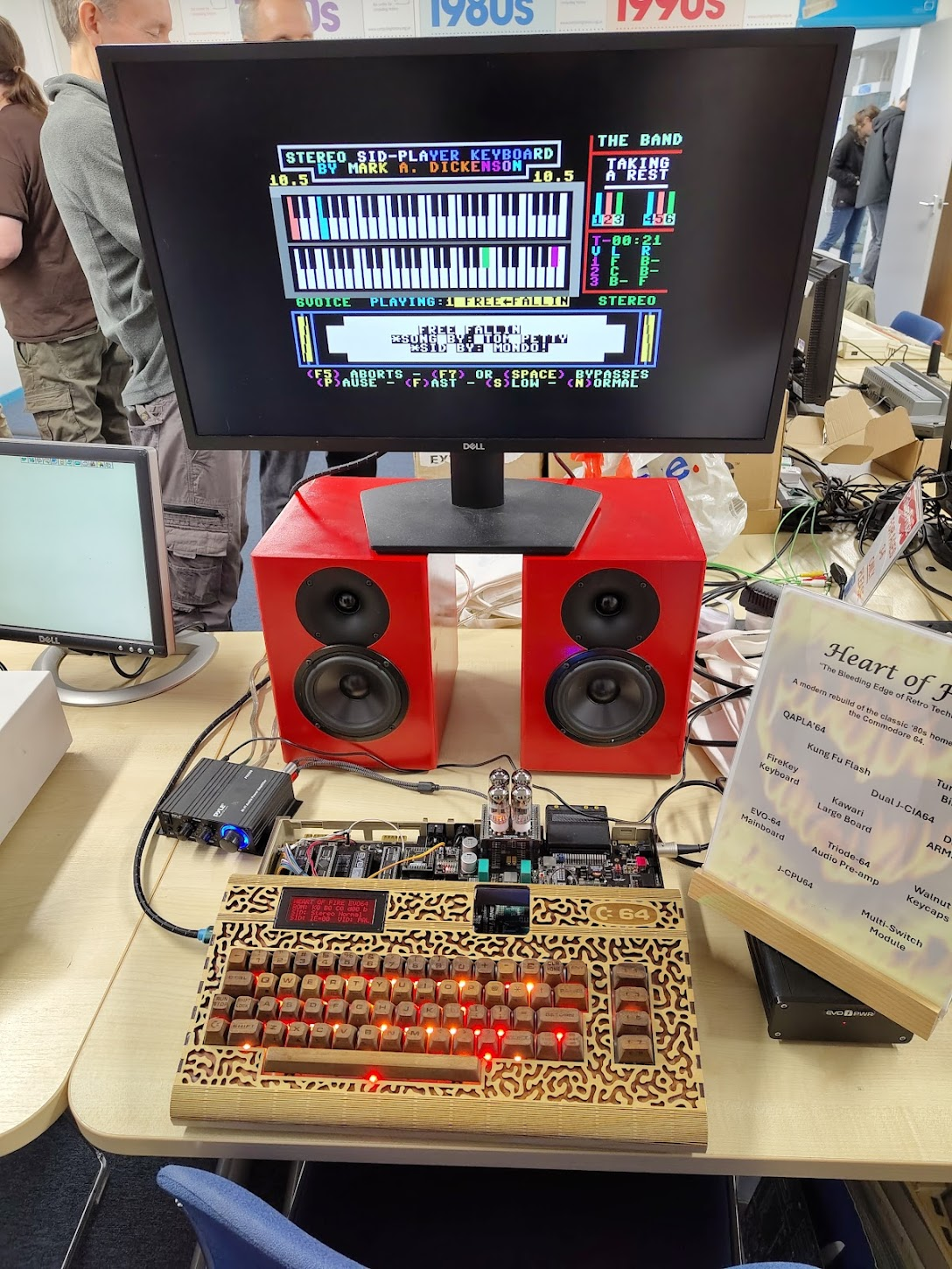
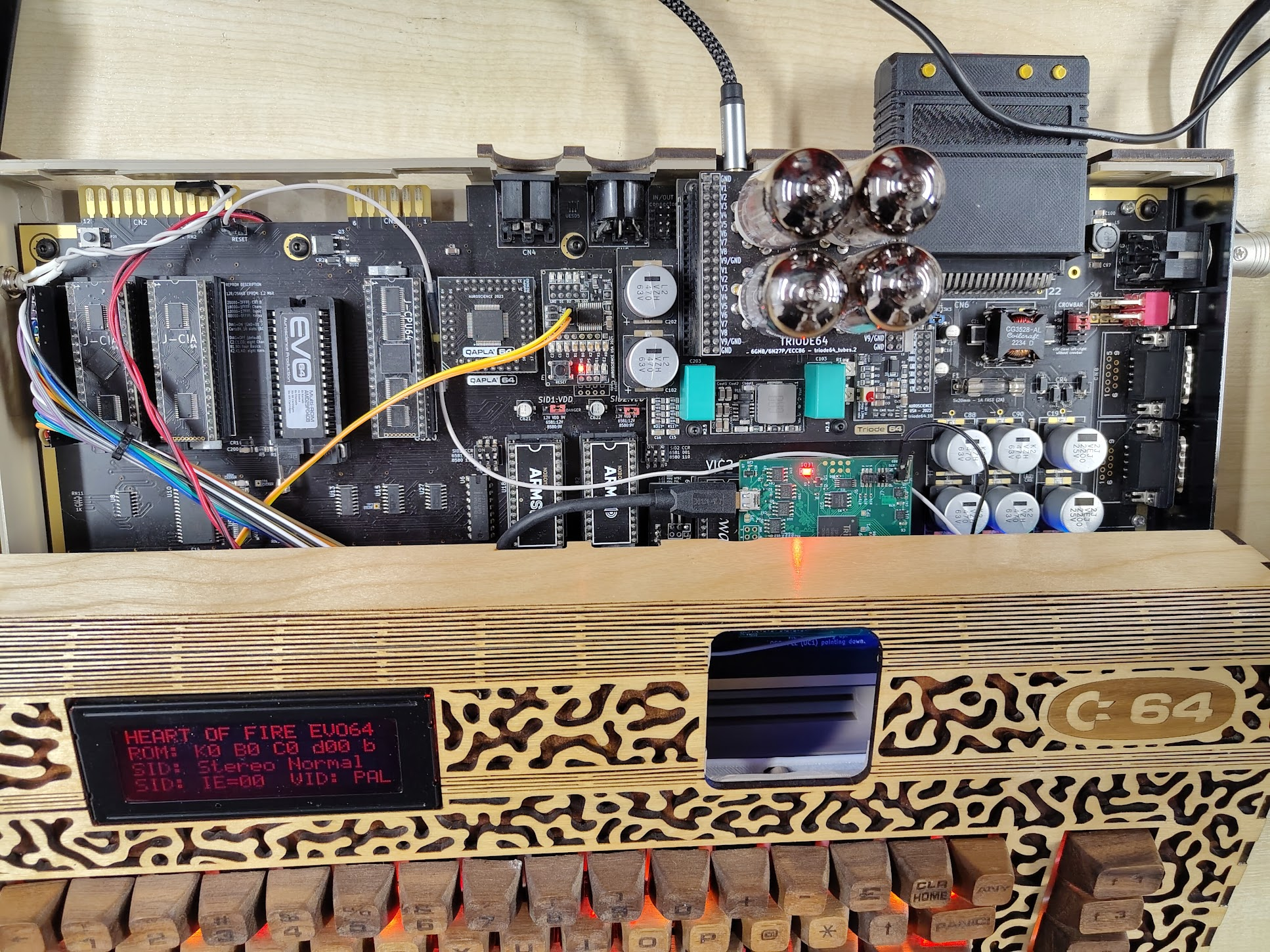
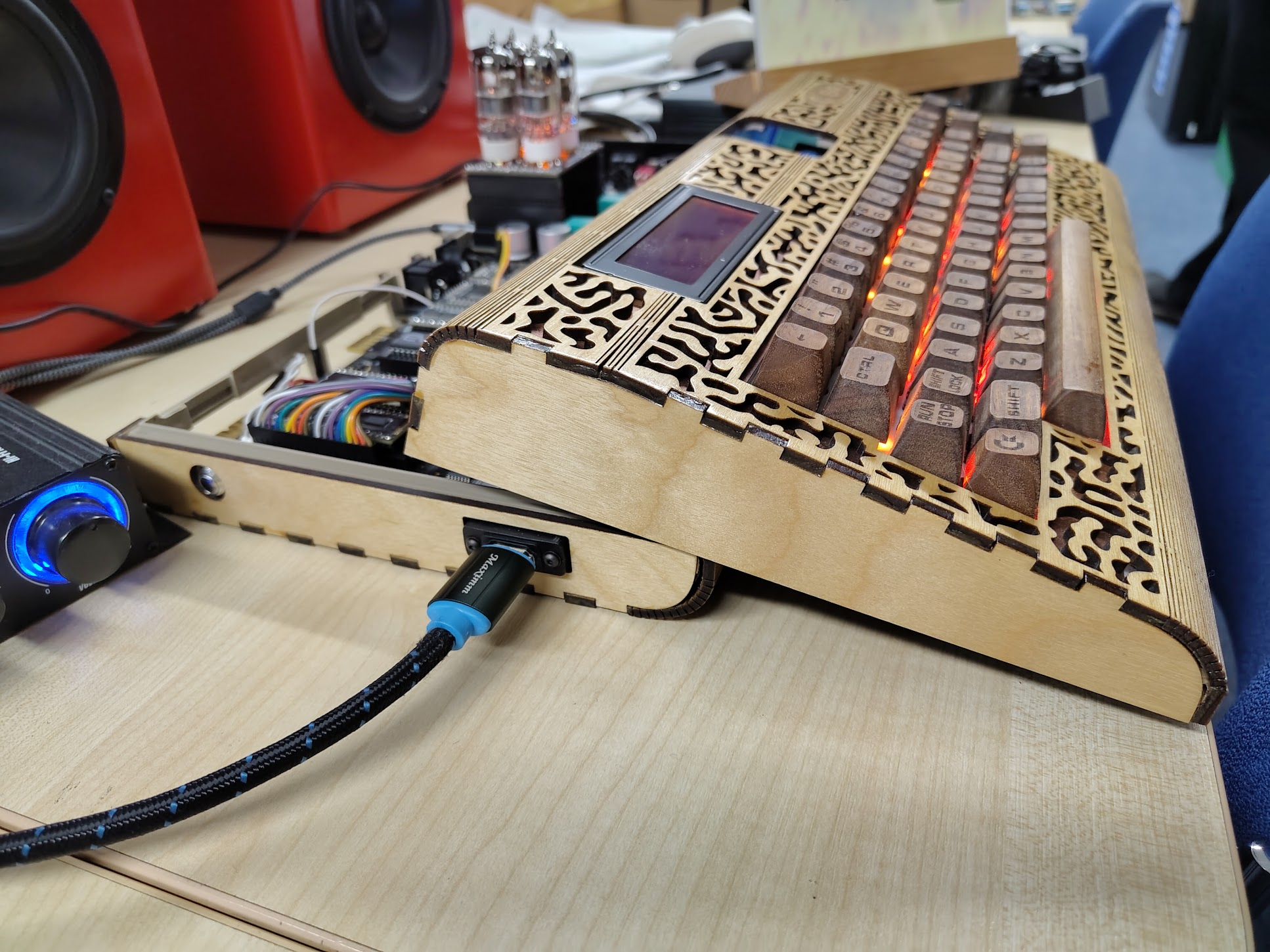
The Heart of Fire

To be raffled off to raise charity money for The Befriending Scheme — watch out for that on Discord!

Meeting #2

12th October, 2025

Cambridge Centre for Computing History

In the room

  • Will Sheldrake (arcadesy) — host
  • Rob Crowther
  • Maria Gloyne
  • Oliver Gloyne
  • Lee (MFFI)
  • Other Lee
  • BinaryDinosaurs
  • Adrian (CCH)
  • Kat (CCH)
  • Andy Mc (CCH volunteer)

On the tables

  • Brandvance Galactic Invaders
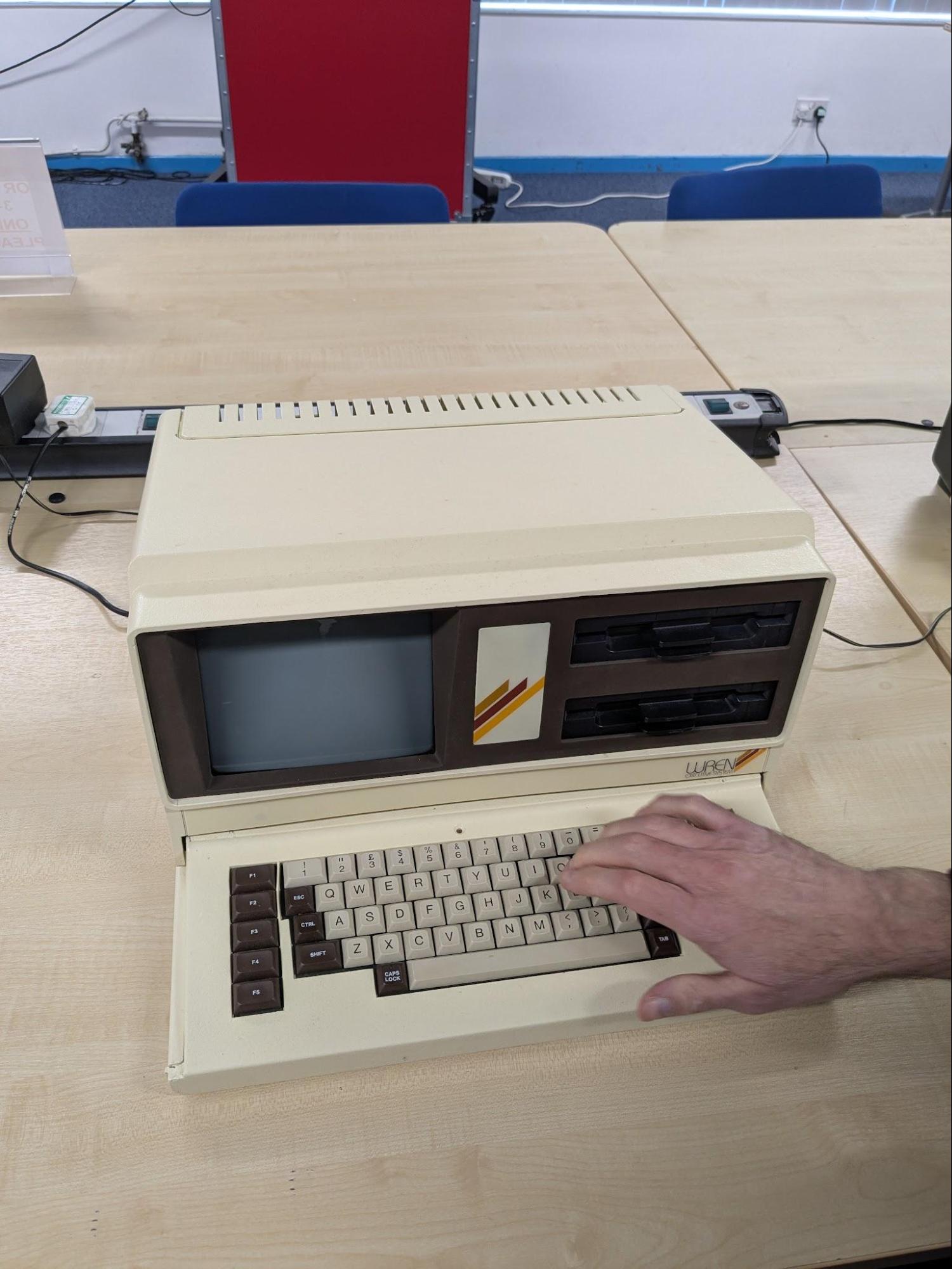
  • Wren Executive System
  • Acorn R140 (RISC iX Unix)
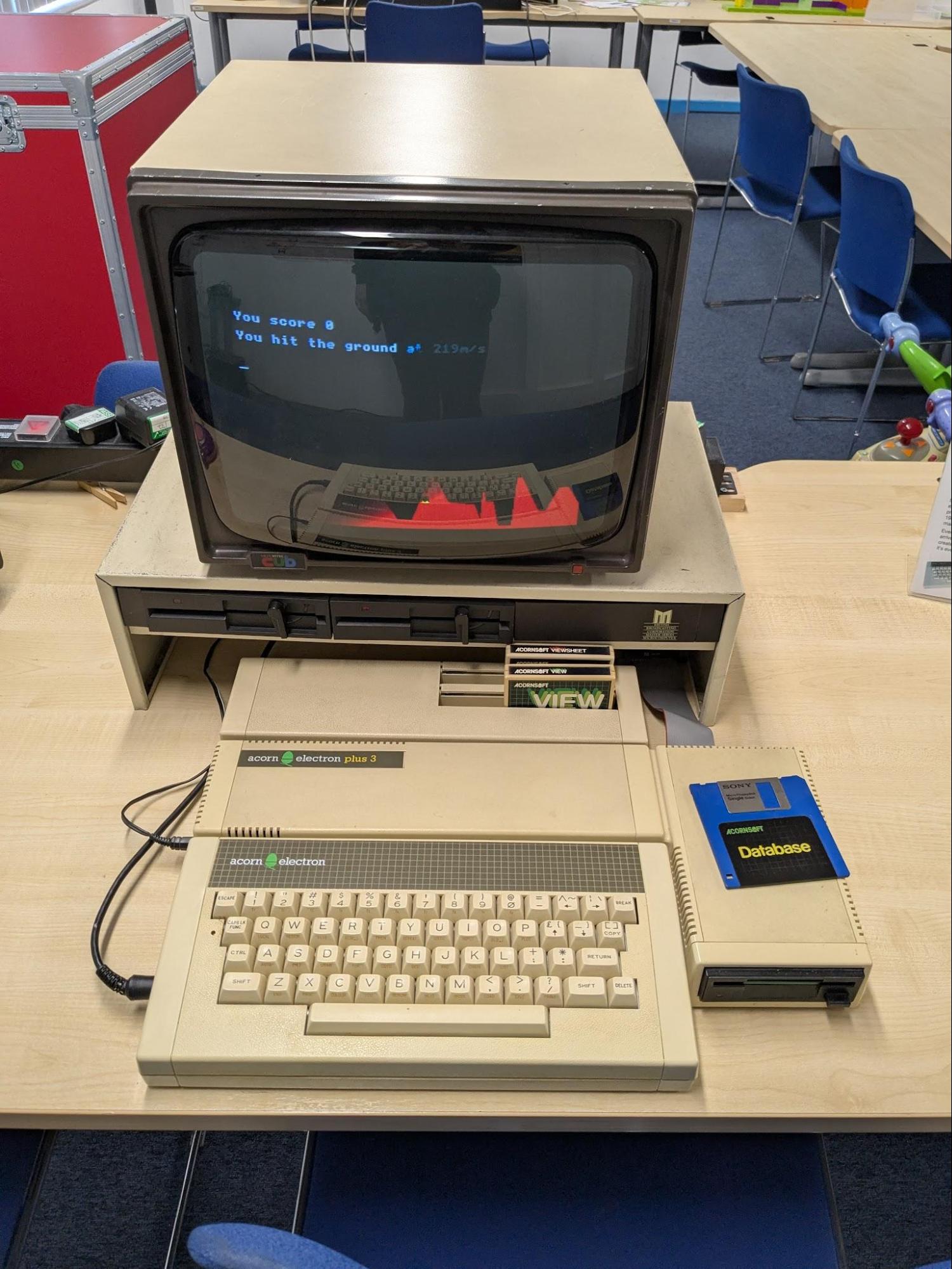
  • Acorn Electron (with expansions)

Meeting Summary

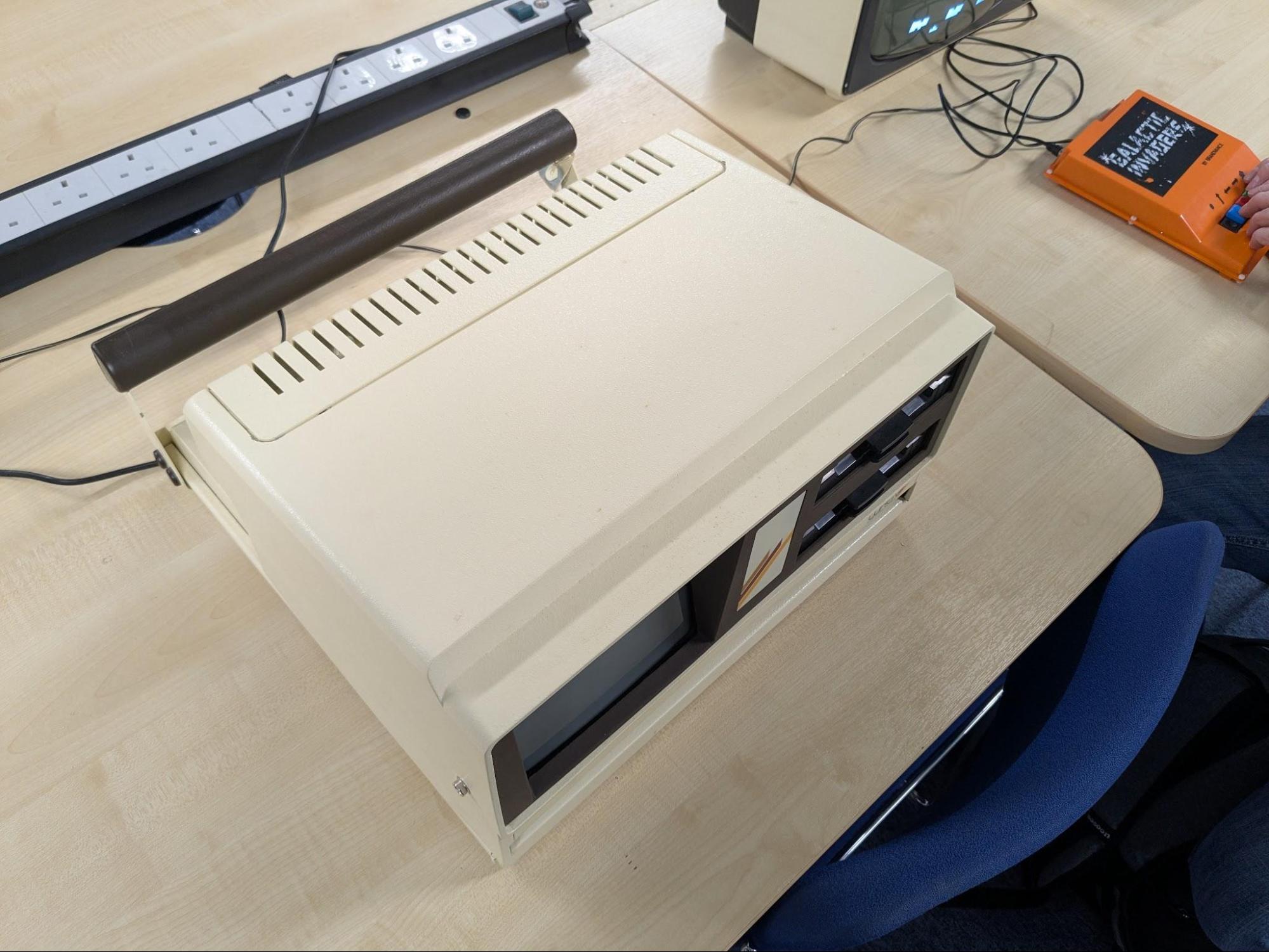
The meeting started with a literal bang — even before everyone had arrived, turning the Wren Executive System on resulted in a pop and a bad smell. A shame, as the luggable looked very neat: usable on a desktop with a built-in monitor, then foldable into itself with a faux leather cover for portability. Portable, but very, very heavy.

The two Lees had fun getting the expanded Electron to play a reasonable game of GORF, followed by fiddling with the display to get a colour image. Lee also tested the Galactic Invaders and made it look easy clearing the first screen — though the game itself wasn't as interesting as contemplating a console apparently built into an orange ZX80 case.

Getting RISC iX started on the Archimedes R140 was quite a process: boot into RISCOS, start the RISC iX app to get a button on the toolbar, click it for a full-screen console, then wait through Unix booting with full disk checks on every startup. Hacking skills were tested as nobody knew the username or password — fortunately documentation was found and they were able to log in and have a look around.

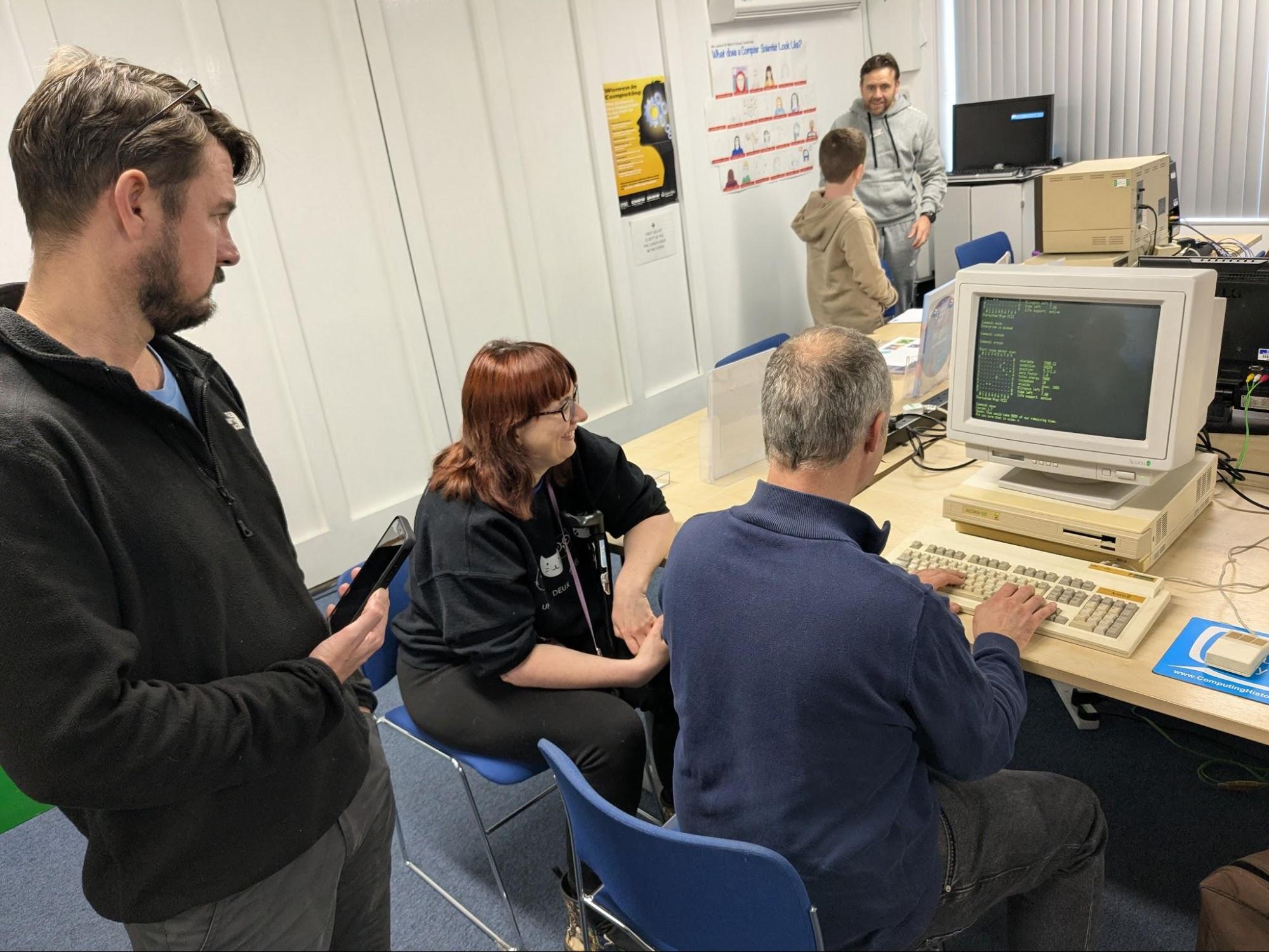
The main highlight was a collection of classic text-only games. The weird version of snake, a tricky Conway's Life, and then the 1970s Star Trek game — Maria and Will spent quite some time nearly figuring it out before switching to Battlestar, a text adventure from 1979.

As the meeting wound up (and two people struggled to carry the Wren back into storage), everyone agreed the next meeting would probably be in January.

Meeting #1

31st August, 2025

Cambridge Centre for Computing History

In the room

  • Will Sheldrake (arcdesey) — host
  • Henry (with Emma & Alexander)
  • Rob Crowther
  • Maria Gloyne

On the tables

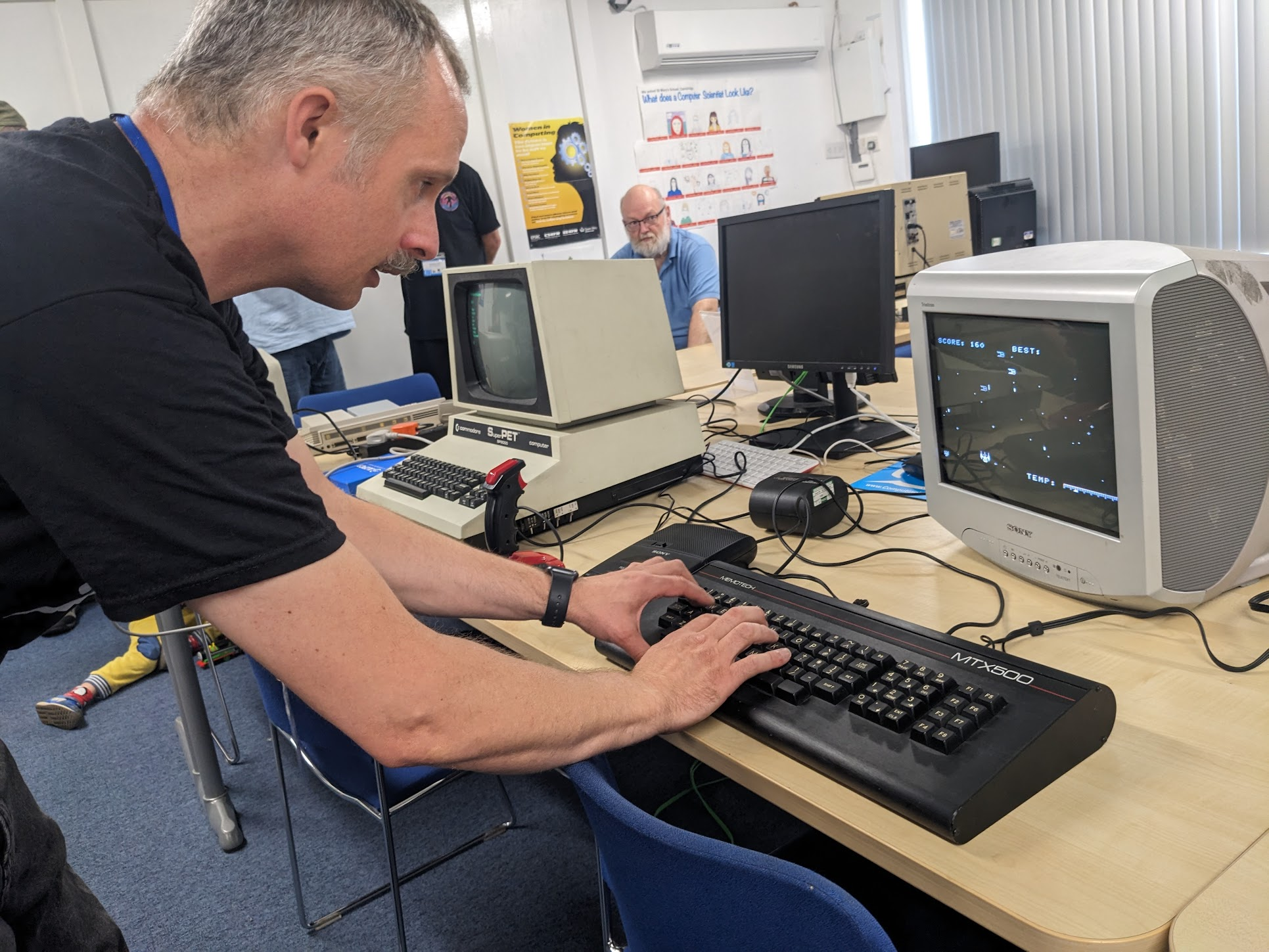
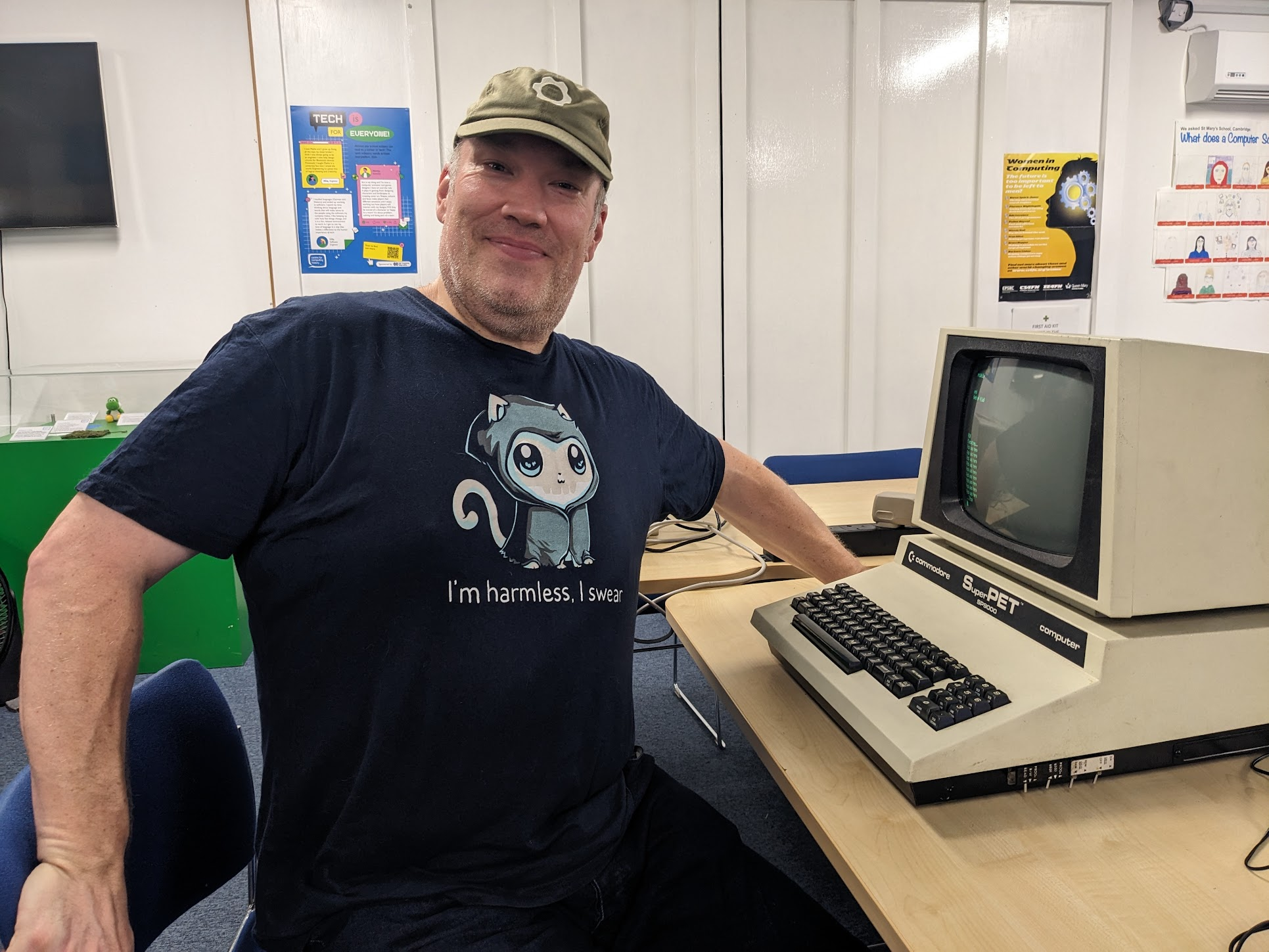
  • Commodore SuperPET
  • Memotech MTX 500
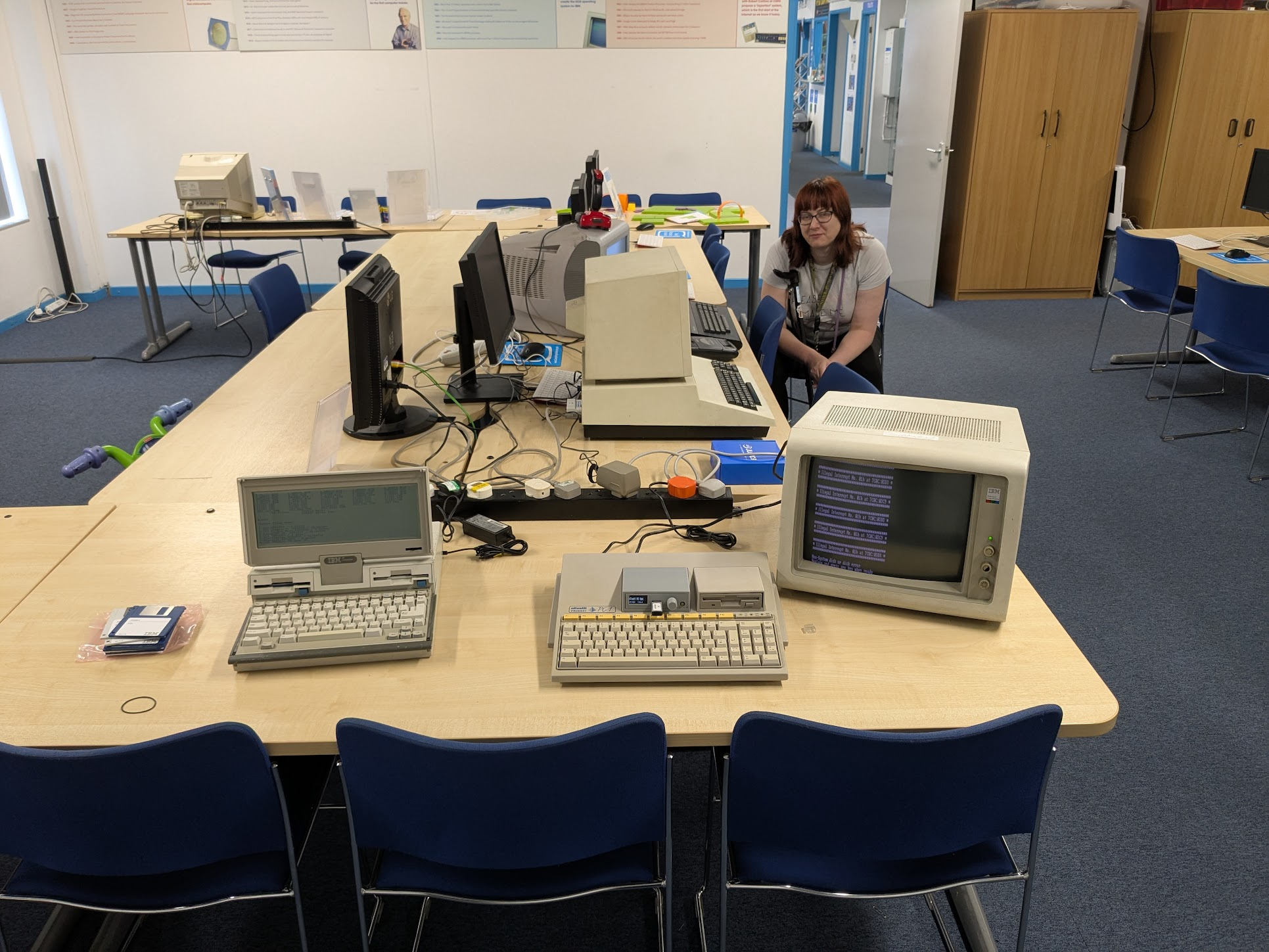
  • IBM 5140 Convertible Computer
  • Olivetti Prodest PC-1

Meeting Summary

Henry demonstrated his two PC-compatible devices using a mixture of floppy disks and modern storage. Attendees enjoyed music from Planet X3 on the IBM 5140, then tested the Olivetti's display capabilities — Prince of Persia was loaded, displaying an exceedingly pink title screen.

Will worked with the Memotech tape games with mixed results. One visitor remarked: "It doesn't even have a mouse!"

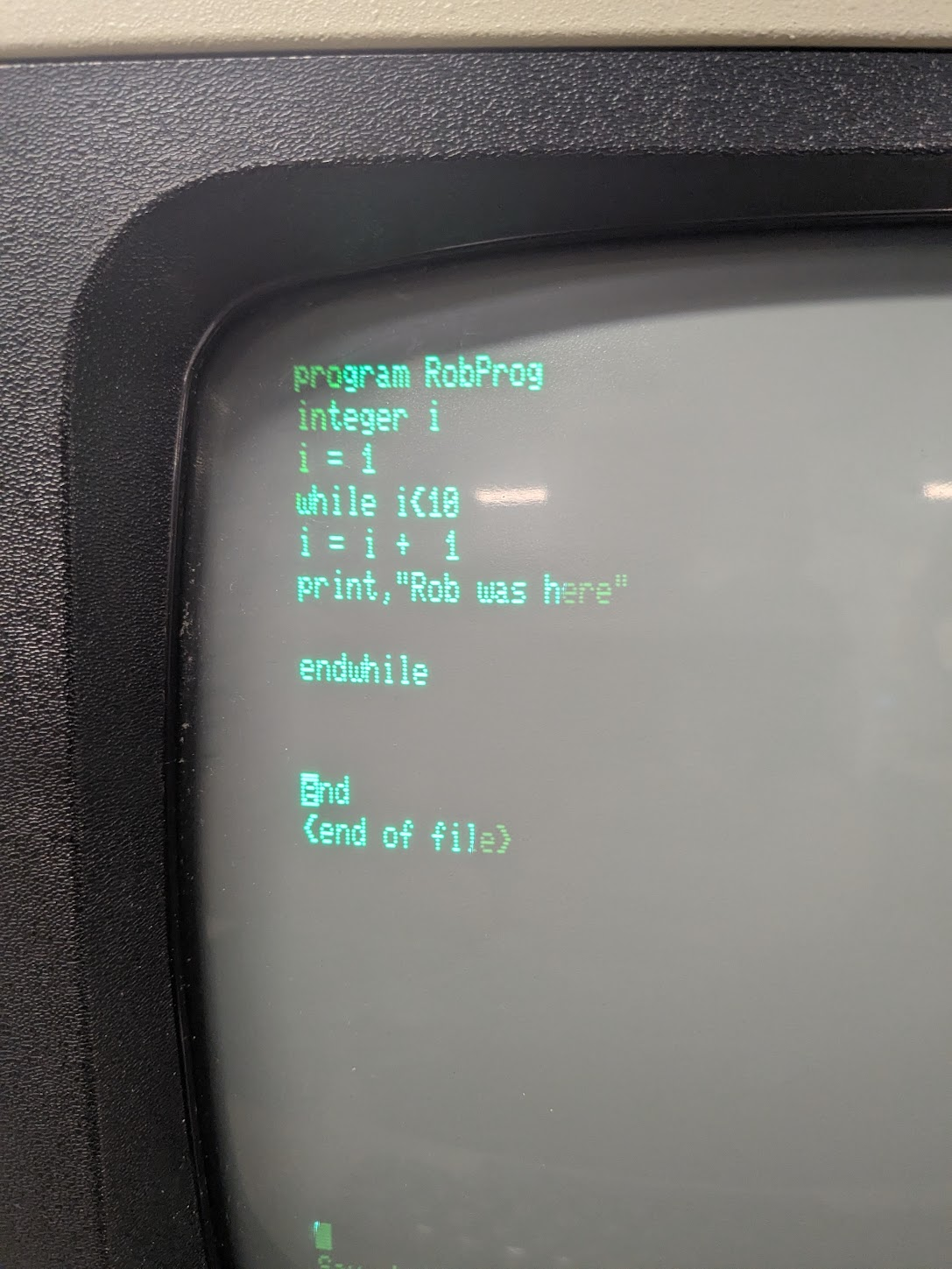
The SuperPET session involved learning FORTRAN on the fly, including discovering that "I" enters edit mode, numeric keypad 5 exits it, and RUN STOP performs syntax checking.

The meeting wound up and everyone agreed they'd try to have another one before Christmas.

No meetings match your search.